
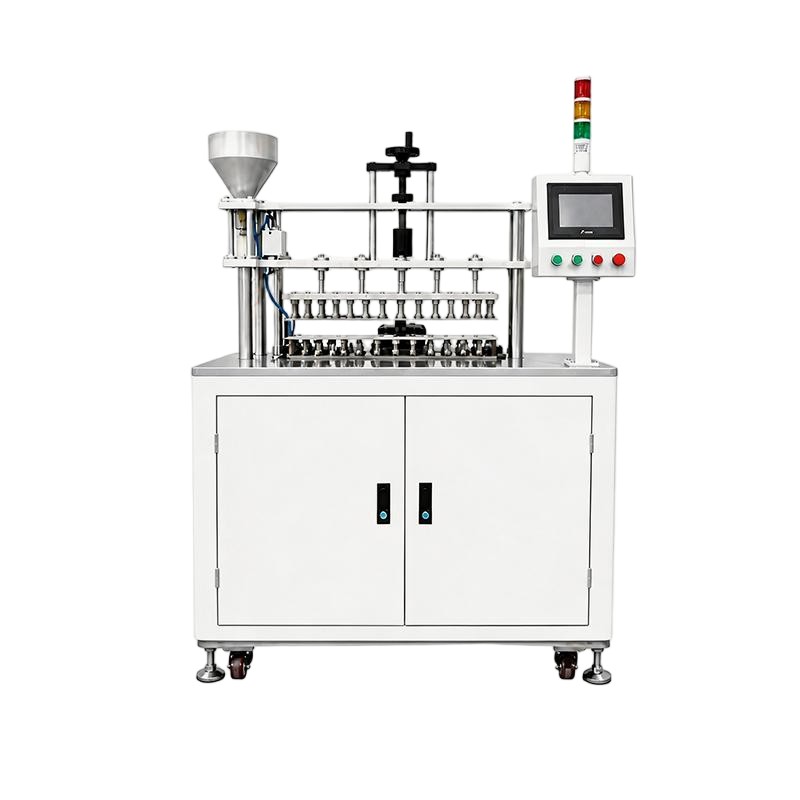
Heat Pipe Equipment Production Line: Complete Guide
1. What Is a Heat Pipe Equipment Production Line?
A Heat Pipe Equipment Production Line is a coordinated collection of machines used to manufacture heat pipes for thermal management applications.
It covers the main production stages, from metal tube preparation to final product inspection. Each machine performs a specific task. Together, they create a repeatable manufacturing process.
Heat pipes transfer thermal energy through evaporation and condensation. They provide efficient heat transfer in compact structures. Manufacturers use them in computers, servers, LED lighting, power electronics, and industrial cooling systems.
However, heat pipe production requires more than basic tube processing. Manufacturers must control internal wick structures, cleanliness, moisture, vacuum conditions, working-fluid quantity, and sealing quality.
A suitable production line helps organize these operations. It can also reduce manual handling and improve manufacturing consistency.
Depending on the product design, a complete line may include:
Copper tube cutting machine
Heat Pipe Necking Machine
Heat Pipe Powder Filling Machine
Vacuum Sintering Furnace
Heat Pipe Multi-station Dry-out Tester
Heat Pipe Vacuum Degassing Machine
Heat Pipe Filling & Welding Machine
Heat Pipe Leak Tester
Heat Pipe Thermal Performance Tester
Not every manufacturer needs all these machines. The equipment configuration depends on the wick structure, tube dimensions, production volume, and automation requirements.
Therefore, manufacturers should define their product specifications before purchasing equipment.
2. How Does Heat Pipe Manufacturing Work?
Understanding the heat pipe operating principle helps explain why each manufacturing stage matters.
A heat pipe is a sealed thermal transfer device. It contains a working fluid and an internal wick structure.
Its operation involves three main stages.
2.1 Evaporation
First, heat enters the evaporator section.
The working fluid absorbs thermal energy and changes from liquid into vapor. This process transfers energy through the vapor phase.
2.2 Vapor Movement
Next, the vapor moves toward the cooler condenser section.
The vapor transports thermal energy along the internal passage. This allows the heat pipe to transfer heat efficiently across a relatively small structure.
2.3 Condensation and Liquid Return
At the condenser section, vapor releases heat and condenses into liquid.
The internal wick structure helps return the liquid toward the evaporator through capillary action.
This cycle continues during normal operation.
Common wick structures include:
Sintered copper powder wick
Grooved wick
Mesh wick
Composite wick
Each structure requires different manufacturing methods. For example, sintered powder wicks need controlled powder filling and sintering processes.
Consequently, the selected Heat Pipe Equipment Production Line must match the intended wick design.
3. Essential Equipment for Heat Pipe Manufacturing
A complete heat pipe manufacturing system combines tube preparation, wick processing, drying, vacuum treatment, filling, sealing, and inspection equipment.
The following machines represent common equipment categories.
3.1 Copper Tube Cutting Machine
The cutting machine prepares copper tubes according to the required dimensions.
Accurate cutting helps maintain consistent product length. It also provides suitable tube ends for later forming and sealing operations.
Manufacturers should evaluate cutting accuracy, burr control, tube diameter compatibility, and production speed.
For high-volume manufacturing, automatic feeding and cutting functions can reduce repetitive manual work.
3.2 Heat Pipe Necking Machine
A Heat Pipe Necking Machine reduces the tube diameter at selected sections.
This operation prepares the tube for subsequent manufacturing steps. It may also create suitable sealing areas.
The machine must match the tube material, wall thickness, and required necking dimensions.
Manufacturers should pay attention to forming accuracy. Excessive deformation can damage the tube or affect its internal space.
3.3 Heat Pipe Powder Filling Machine
Some heat pipes use sintered copper powder as their internal wick structure.
A Heat Pipe Powder Filling Machine introduces copper powder into the tube. The process must control powder quantity and distribution.
Consistent powder filling helps prepare the internal structure for sintering.
Important selection factors include:
- Powder filling accuracy
- Tube diameter compatibility
- Filling method
- Production capacity
- Fixture design
- Cleaning and maintenance requirements
Manufacturers should select a machine that matches the required wick structure and product range.
3.4 Vacuum Sintering Furnace
A Vacuum Sintering Furnace bonds metal powder particles through controlled heating.
For sintered wick heat pipes, this process creates a porous internal structure. The structure supports capillary liquid return during operation.
Vacuum conditions help control the processing atmosphere. Temperature and holding time must match the material and wick design.
Manufacturers should validate the sintering recipe to achieve consistent wick characteristics.
They should also consider furnace capacity, temperature uniformity, loading methods, and maintenance requirements.
3.5 Heat Pipe Multi-station Dry-out Tester
Drying removes residual moisture and volatile substances from prepared heat pipe components.
A multi-station design allows several components to undergo processing within the same operating cycle or across multiple processing positions.
Controlled drying helps prepare heat pipes for later evacuation and working-fluid charging.
The required temperature and drying duration depend on product design and process conditions.
For production applications, manufacturers should evaluate station capacity, temperature control, loading convenience, and process repeatability.
3.6 Heat Pipe Vacuum Degassing Machine
A Heat Pipe Vacuum Degassing Machine helps remove unwanted gases and volatile substances from the internal space.
This operation supports preparation before working-fluid charging and final sealing.
Manufacturers should evaluate vacuum performance, pumping capacity, connection design, and process stability.
The required vacuum conditions depend on the heat pipe specification and manufacturing method.
3.7 Heat Pipe Filling & Welding Machine
The filling and welding machine introduces the specified working fluid and seals the heat pipe.
Working-fluid quantity is a critical manufacturing parameter. An unsuitable charge can affect thermal performance and operating stability.
The welding process must also produce a reliable seal.
Manufacturers should evaluate:
- Filling accuracy
- Working-fluid compatibility
- Welding method
- Sealing consistency
- Process control functions
- Product changeover requirements
A suitable machine helps manufacturers control two important operations within a coordinated workflow.
3.8 Heat Pipe Leak Tester
A Heat Pipe Leak Tester checks the integrity of the sealed heat pipe.
Leak testing helps identify leakage that could affect internal pressure or working-fluid retention.
Depending on the product and factory process, manufacturers may use pressure-based, vacuum-based, or tracer-gas testing methods.
The selected method should meet the required inspection sensitivity and product specifications.
3.9 Heat Pipe Thermal Performance Tester
A Heat Pipe Thermal Performance Tester evaluates the heat transfer capability of finished products.
Testing parameters may include heat input, temperature distribution, thermal resistance, and operating orientation.
These results help manufacturers verify product performance against technical requirements.
A consistent testing method also makes production quality easier to monitor.
4. Heat Pipe Equipment Production Process
The manufacturing sequence depends on the heat pipe design and selected production method.
A typical process for a copper heat pipe with a sintered wick includes the following stages.
Step 1: Copper Tube Preparation
First, manufacturers select copper tubes with suitable dimensions and material properties.
The cutting machine produces tubes with the required length. Operators then inspect the cut surfaces and remove burrs when necessary.
Consistent tube preparation helps reduce problems during later processing.
Step 2: Tube Forming and Necking
Next, the tube undergoes forming or necking when the product design requires it.
This operation creates the required geometry for subsequent assembly and sealing.
Manufacturers should control forming dimensions carefully. Excessive deformation can damage the tube or reduce its usable internal space.
Step 3: Wick Preparation
The production team prepares the internal wick structure.
For sintered powder designs, the powder filling machine introduces copper powder into the tube.
The powder quantity and distribution must match the product specification.
Other heat pipe designs may use grooves, mesh, or composite wick structures. These designs require different preparation methods.
Step 4: Sintering
The prepared tube enters a vacuum sintering furnace when the design requires a sintered wick.
Controlled heating bonds the copper powder particles. This creates a porous structure that supports capillary action.
The sintering process must achieve the required wick properties without damaging the tube.
Step 5: Drying
After relevant preparation and cleaning operations, the components undergo controlled drying.
The dry-out process removes residual moisture and prepares the internal surfaces for subsequent treatment.
Manufacturers should establish suitable drying conditions for each product type.
Step 6: Vacuum Degassing
The prepared heat pipe undergoes vacuum treatment.
This process helps remove unwanted gases and supports a suitable internal environment before charging.
The operation should follow validated vacuum and timing parameters.
Step 7: Working-fluid Filling
The filling system introduces the specified working fluid.
The correct fluid and charge quantity depend on the heat pipe material, operating temperature, dimensions, and application.
Manufacturers should establish accurate filling procedures and monitor charge consistency.
Step 8: Welding and Sealing
After filling, the machine seals the heat pipe.
The sealing process must prevent leakage and maintain the required internal conditions.
Manufacturers should inspect welding quality and verify the sealing process through suitable tests.
Step 9: Leak Testing
Each finished heat pipe undergoes leak inspection according to the factory’s quality plan.
This step helps identify defective seals and other leakage paths.
A suitable inspection method reduces the risk of defective products reaching customers.
Step 10: Thermal Performance Testing
Finally, manufacturers evaluate the finished product’s thermal behavior.
Testing may include temperature measurements and thermal resistance calculations.
Products that meet the required specifications can proceed to final inspection and packaging.
5. Different Heat Pipe Production Line Configurations
Different products and production targets require different equipment combinations.
Manufacturers should select a configuration according to the intended manufacturing process.
5.1 Semi-automatic Heat Pipe Production Line
A semi-automatic line combines automated processing equipment with manual loading, unloading, or material transfer.
This configuration may suit small and medium-sized factories. It can also support manufacturers producing several product models.
Its main advantage is flexibility. Manufacturers can introduce automation gradually without investing in a fully integrated system immediately.
However, manual operations still require standardized procedures and trained operators.
5.2 Fully Automatic Heat Pipe Production Line
A fully automatic line uses integrated equipment and material handling systems to reduce manual intervention.
Depending on the configuration, it may include automatic feeding, transfer, positioning, process control, and inspection functions.
This approach can improve production efficiency and process repeatability.
However, manufacturers should evaluate the complete production workflow. Automation provides limited benefits if one machine creates a major bottleneck.
5.3 Sintered Wick Heat Pipe Production Line
Sintered wick heat pipes require controlled powder preparation and sintering.
A typical configuration may include:
- Copper tube cutting equipment
- Powder filling machine
- Vacuum sintering furnace
- Dry-out equipment
- Vacuum degassing machine
- Working-fluid filling and welding equipment
- Leak and thermal performance testers
Manufacturers should pay particular attention to powder quantity, wick porosity, and sintering conditions.
5.4 Customized Heat Pipe Production Line
Some factories manufacture heat pipes with special dimensions, shapes, or performance requirements.
Standard equipment may require customized fixtures, tooling, or control functions.
A customized production line should reflect the actual product range and expected output.
Manufacturers should discuss product samples and technical drawings with the supplier before confirming the machine configuration.
6. Key Factors Affecting Production Efficiency
Equipment selection is only one part of successful heat pipe manufacturing.
Production efficiency also depends on process stability, machine compatibility, and factory organization.
6.1 Equipment Cycle Time
Every machine has a processing cycle.
If one operation takes significantly longer than others, it may restrict the output of the entire line.
For example, a long sintering cycle may require larger batch capacity or additional furnace capacity.
Manufacturers should compare cycle times before selecting equipment.
6.2 Production Capacity Matching
Each machine should support the required output of the next process.
If filling equipment processes fewer components than the drying station, work-in-process inventory may accumulate.
Therefore, production planning should consider the capacity of the complete workflow.
6.3 Material Handling
Manual transfer between machines can increase labor requirements and create unnecessary waiting time.
Suitable fixtures, storage arrangements, conveyors, and automatic handling systems can improve material flow.
However, manufacturers should ensure that handling methods protect product dimensions and internal cleanliness.
6.4 Process Repeatability
Consistent machine settings help reduce differences between production batches.
Programmable temperature control, vacuum monitoring, and filling parameters can support standardized operations.
Manufacturers should also document approved recipes and control changes.
6.5 Equipment Maintenance
Poor maintenance can cause unexpected downtime and process variation.
Factories should establish maintenance schedules for pumps, sensors, heating systems, fixtures, and other important components.
Preventive maintenance helps keep equipment operating consistently.
7. Benefits of an Integrated Heat Pipe Production Line
An integrated Heat Pipe Equipment Production Line can offer several manufacturing advantages.
7.1 Improved Production Efficiency
Coordinated machines reduce unnecessary material movement and repetitive manual operations.
When equipment capacity matches the production target, factories can organize work more efficiently.
This can help manufacturers increase output without creating excessive work-in-process inventory.
7.2 Better Product Consistency
Standardized equipment settings help operators repeat important manufacturing operations.
This is especially useful for powder filling, sintering, drying, vacuum treatment, and working-fluid charging.
Consistent processes make quality monitoring easier.
7.3 Reduced Manual Handling
Automation can reduce repetitive loading, unloading, and transfer operations.
It may also lower the risk of handling-related damage.
However, factories still need trained operators for inspection, maintenance, and process supervision.
7.4 Easier Quality Management
Modern equipment may support temperature monitoring, vacuum measurement, parameter storage, and process records.
These functions help production teams identify abnormalities and review manufacturing conditions.
When integrated with a suitable quality management system, they can also support product traceability.
7.5 Flexible Production Planning
A well-designed line can support different heat pipe models through interchangeable fixtures and approved process recipes.
This flexibility helps manufacturers serve customers with varied product requirements.
However, manufacturers should consider changeover time and tooling costs when planning production.
8. How to Choose Heat Pipe Manufacturing Equipment
Selecting a Heat Pipe Equipment Production Line requires a clear understanding of current and future manufacturing needs.
8.1 Define Product Specifications
Start with the heat pipe models you intend to manufacture.
Prepare information about:
- Tube diameter and length
- Tube material and wall thickness
- Wick structure
- Working-fluid type
- Required thermal performance
- Product shape and forming requirements
- Expected production volume
These specifications help suppliers recommend compatible machines.
8.2 Calculate Required Production Capacity
Determine your target output per shift, day, or month.
Then calculate the required capacity for each manufacturing stage.
The slowest process may limit the output of the entire line. Therefore, compare the cycle times of all major machines.
Do not rely only on the advertised capacity of individual equipment.
8.3 Select the Appropriate Automation Level
Not every factory needs a fully automatic production line.
Small factories may prefer semi-automatic equipment with manual loading. Larger manufacturers may benefit from automatic handling and coordinated control systems.
The right choice depends on labor availability, product variety, investment budget, and output targets.
8.4 Evaluate Machine Compatibility
Machines must work together effectively.
For example, powder filling equipment should match tube dimensions and wick design. Filling and welding equipment must support the required sealing method.
Manufacturers should review the complete workflow before purchasing individual machines.
8.5 Check Process Control Functions
Ask suppliers about:
- Temperature control accuracy
- Vacuum measurement and monitoring
- Powder filling consistency
- Working-fluid filling accuracy
- Welding parameter control
- Alarm and safety functions
- Process data recording
These functions help manufacturers establish repeatable production procedures.
8.6 Consider Maintenance and Technical Support
Evaluate equipment maintenance requirements and replacement part availability.
Ask about installation, commissioning, operator training, and technical support.
These services can influence equipment uptime and long-term operating costs.
9. Applications of Heat Pipe Production Equipment
Heat pipes serve many industries that require effective thermal management.
9.1 Consumer Electronics
Heat pipes help transfer heat in laptops, desktop computers, gaming devices, and compact electronic products.
Their compact structure makes them useful for managing heat in limited spaces.
9.2 Server and Data Center Cooling
High-performance computing systems generate substantial heat.
Heat pipes can support thermal management in server cooling assemblies and other electronic systems.
Manufacturers must ensure consistent product performance for demanding applications.
9.3 LED Lighting
LED systems require effective heat dissipation to maintain stable operation.
Heat pipes can help transfer heat away from LED modules and distribute it toward cooling structures.
9.4 Power Electronics
Power conversion equipment and electronic control systems may use heat pipes to manage concentrated thermal loads.
Suitable designs can help maintain operating temperatures within specified limits.
9.5 Industrial Thermal Management
Industrial equipment may use heat pipes in specialized cooling and heat recovery applications.
The required product design depends on temperature conditions, installation space, and operating environment.
10. Common Manufacturing Problems and Solutions
Heat pipe manufacturing involves several processes that require careful coordination.
Production problem | Possible cause | Recommended solution |
Inconsistent wick structure | Uneven powder filling or sintering conditions | Control powder quantity and validate furnace recipes |
Residual moisture | Insufficient drying or unsuitable process settings | Review drying procedures and validate cycle conditions |
Unstable vacuum conditions | Pump performance or connection leakage | Inspect vacuum systems and sealing connections |
Incorrect fluid charge | Filling parameter variation | Calibrate filling equipment and monitor charge quantity |
Poor sealing quality | Unsuitable welding parameters or tube preparation | Optimize welding conditions and inspect seals |
Low production output | Uneven equipment capacity | Balance cycle times across the production line |
High manual workload | Excessive handling between machines | Evaluate fixtures, conveyors, and automation options |
Inconsistent thermal results | Material or process variation | Standardize manufacturing and testing conditions |
Establishing a Stable Manufacturing Process
Manufacturers should establish documented procedures for every production stage.
These procedures should define operating parameters, inspection requirements, and acceptable product conditions.
Production teams should also record process deviations and investigate repeated problems.
This approach supports continuous improvement and helps reduce unnecessary production losses.
11. Why Choose linkthermal?
Selecting the right equipment supplier is an important step when building or upgrading a heat pipe factory.
linkthermal focuses on manufacturing equipment for heat pipes and vapor chambers. Its equipment categories help manufacturers explore solutions for different production processes.
When evaluating a Heat Pipe Equipment Production Line, buyers should consider the complete manufacturing workflow rather than purchasing machines independently.
A suitable production solution should match product dimensions, wick structures, required output, and quality standards.
Before confirming an equipment configuration, manufacturers should discuss several technical details with the supplier:
- Heat pipe models and dimensions
- Required production capacity
- Wick preparation method
- Powder filling and sintering requirements
- Drying and vacuum treatment conditions
- Working-fluid filling and sealing methods
- Inspection and testing requirements
- Factory layout and automation preferences
Clear technical communication helps reduce equipment mismatches. It also makes production planning more accurate.
Visit linkthermal to explore heat pipe and vapor chamber manufacturing equipment.
12. Frequently Asked Questions
12.1 What is a Heat Pipe Equipment Production Line?
A Heat Pipe Equipment Production Line is a coordinated system of machines used to manufacture heat pipes. It may include tube cutting, wick preparation, sintering, drying, vacuum treatment, filling, welding, and inspection equipment.
12.2 What machines are needed for heat pipe manufacturing?
Common machines include copper tube cutting machines, powder filling machines, vacuum sintering furnaces, dry-out testers, vacuum degassing machines, filling and welding machines, leak testers, and thermal performance testers.
The exact configuration depends on the heat pipe design.
12.3 What is the function of a vacuum sintering furnace?
A Vacuum Sintering Furnace bonds metal powder particles under controlled heating conditions. For sintered wick heat pipes, it creates a porous internal structure that supports capillary liquid return.
12.4 Why is drying important in heat pipe production?
Drying helps remove residual moisture and volatile substances from prepared components. This supports a more controlled internal environment before subsequent vacuum treatment and working-fluid charging.
12.5 What does a vacuum degassing machine do?
A vacuum degassing machine helps remove unwanted gases and volatile substances from the heat pipe’s internal space. It prepares the component for subsequent filling and sealing operations.
12.6 Why is working-fluid filling accuracy important?
The working-fluid quantity affects heat pipe operation. An unsuitable charge can reduce thermal performance under certain conditions. Manufacturers should establish filling targets and monitor process consistency.
12.7 Can one production line manufacture different heat pipe sizes?
Yes, if the machines support the required dimensions and process conditions. Manufacturers may need interchangeable fixtures, adjustable tooling, or different process recipes for different models.
12.8 What is the difference between semi-automatic and fully automatic production lines?
A semi-automatic line requires operators for selected loading, unloading, or transfer operations. A fully automatic line uses integrated handling and control systems to reduce manual intervention.
12.9 How can manufacturers improve heat pipe production efficiency?
Manufacturers can balance machine cycle times, reduce material handling, improve process stability, and introduce suitable automation. They should identify production bottlenecks before expanding equipment capacity.
12.10 What should buyers consider before purchasing heat pipe manufacturing equipment?
Buyers should evaluate product specifications, production targets, machine compatibility, automation level, process controls, maintenance requirements, and supplier support.
A complete workflow review helps identify the most suitable equipment configuration.
13. Conclusion
A Heat Pipe Equipment Production Line combines specialized machines to manufacture reliable thermal management components.
From copper tube preparation to wick formation, drying, vacuum treatment, filling, welding, and final testing, every stage contributes to product quality.
Manufacturers should select equipment according to their product designs and production targets. They should also ensure that individual machines work together as a coordinated system.
With suitable process control and equipment integration, factories can improve production consistency, increase throughput, and support different heat pipe applications.
For manufacturers planning to establish or upgrade a heat pipe factory, linkthermal provides a relevant starting point for exploring heat pipe and vapor chamber manufacturing equipment.