
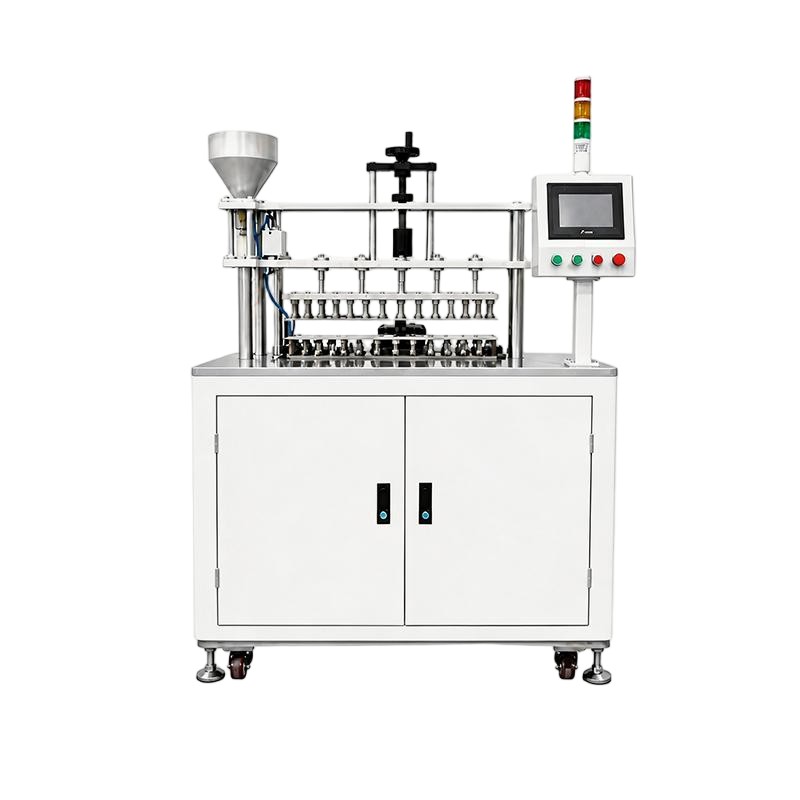
Heat Pipe Production Line: Equipment and Process Guide
1. What Is a Heat Pipe Production Line?
A Heat Pipe Production Line combines specialized machines for manufacturing heat pipes. It supports every major stage, from tube preparation to final product testing.
Heat pipes transfer thermal energy through evaporation and condensation. They offer an effective solution for many thermal management applications.
However, manufacturing heat pipes requires precise control. Internal wick structures, working fluid quantities, and sealing quality all affect performance.
A complete production line may include:
- Tube cutting equipment
- Heat pipe necking machines
- Powder filling machines
- Vacuum sintering furnaces
- Vacuum degassing machines
- Working fluid filling systems
- Filling and welding machines
- Thermal performance testers
- Dry-out testing equipment
Each machine handles a specific manufacturing operation. Together, they create a coordinated production workflow.
For manufacturers, the right configuration depends on product dimensions, wick structures, production capacity, and quality requirements.
2. How Does a Heat Pipe Production Line Work?
A Heat Pipe Production Line transforms metal tubes into functional thermal components. It combines mechanical processing, internal structure preparation, vacuum treatment, fluid charging, and inspection.
First, manufacturers prepare copper or other suitable metal tubes. They cut each tube according to product dimensions.
Next, they create the required internal wick structure. Common structures include sintered powder, grooves, mesh, and composite designs.
Afterward, manufacturers clean and process the tubes. Vacuum treatment helps remove unwanted gases before working fluid charging.
The filling system introduces a controlled quantity of working fluid. The sealing machine then closes the tube.
Finally, manufacturers inspect dimensions and evaluate thermal performance.
Each stage affects the next operation. Therefore, manufacturers should plan the complete process before purchasing individual machines.
3. Essential Equipment for Heat Pipe Manufacturing
A complete production line requires different machines for different manufacturing stages. The following equipment covers common production requirements.
3.1 Heat Pipe Tube Cutting Machine
Tube cutting prepares raw materials for further processing.
The machine cuts metal tubes to specified lengths. Accurate cutting helps maintain dimensional consistency.
Manufacturers should consider several factors:
- Tube diameter and wall thickness
- Required cutting length
- Cutting tolerance
- Feeding method
- Production speed
- Material compatibility
Consistent tube preparation supports smoother downstream operations.
3.2 Heat Pipe Necking Machine
A necking machine reduces the diameter of selected tube sections.
This operation prepares tube ends for subsequent processing. It can also create specific shapes required by product designs.
The required necking dimensions depend on tube specifications and manufacturing methods.
Manufacturers should evaluate tooling compatibility and adjustment methods. They should also confirm the machine’s supported tube dimensions.
Internal link opportunity: [Heat Pipe Necking Machine]
3.3 Heat Pipe Powder Filling Machine
Powder filling equipment introduces metal powder into heat pipe tubes.
This process supports the formation of sintered powder wick structures. Powder distribution affects the internal structure and capillary performance.
Manufacturers should control the following factors:
- Powder material
- Particle size distribution
- Filling quantity
- Powder distribution
- Tube positioning
- Filling consistency
Suitable filling equipment helps improve process control. It also reduces unnecessary material waste.
Internal link opportunity: [Heat Pipe Powder Filling Machine]
3.4 Vacuum Sintering Furnace
A vacuum sintering furnace processes powder-filled tubes under controlled heating conditions.
The heat bonds powder particles into a porous structure. This structure supports working fluid circulation inside the heat pipe.
Important process parameters include:
- Heating temperature
- Holding time
- Vacuum conditions
- Powder characteristics
- Cooling conditions
Manufacturers should select suitable parameters for their materials and product designs.
Internal link opportunity: [Vacuum Sintering Furnace]
3.5 Heat Pipe Vacuum Degassing Machine
Vacuum degassing removes unwanted gases from heat pipe interiors.
Residual gases can affect internal pressure and heat transfer behavior. Therefore, degassing plays an important role in manufacturing.
The required vacuum conditions depend on product design and process requirements.
Manufacturers should evaluate vacuum performance and equipment compatibility. Regular maintenance also helps maintain stable operating conditions.
Internal link opportunity: [Heat Pipe Vacuum Degassing Machine]
3.6 Heat Pipe Filling & Welding Machine
This machine introduces working fluid and seals the heat pipe.
The filling process requires accurate fluid control. The correct quantity depends on internal volume and wick structure.
After charging, the equipment performs the required sealing or welding operation.
Manufacturers should consider filling accuracy, welding quality, fixture design, and tube compatibility.
Internal link opportunity: [Heat Pipe Filling & Welding Machine]
3.7 Heat Pipe Multi-Station Dry-out Tester
Dry-out testing evaluates heat pipe behavior under specified operating conditions.
A multi-station design can test several samples within one testing cycle. This arrangement supports production inspection and product comparison.
Manufacturers should define suitable heating power and test conditions. Product orientation and operating time may also affect results.
Internal link opportunity: [Heat Pipe Multi-Station Dry-out Tester]
3.8 Heat Pipe Thermal Performance Tester
Thermal performance testing evaluates heat transfer characteristics.
Manufacturers use testing results to compare products and identify production variations.
Common evaluation parameters include temperature differences and thermal resistance. Heating power and test orientation may also matter.
The test method should match product specifications and customer requirements.
Internal link opportunity: [Heat Pipe Thermal Performance Tester]
4. Heat Pipe Production Process: Step by Step
A Heat Pipe Production Line connects multiple manufacturing operations. The following steps describe a typical process for heat pipes with sintered powder wick structures.
Step 1: Raw Material Preparation
Manufacturers select suitable metal tubes and wick materials.
They inspect tube dimensions and surface conditions before production. Proper preparation helps reduce problems during later operations.
Step 2: Tube Cutting
The cutting machine prepares tubes according to specified lengths.
Operators check cutting dimensions and surface quality. Consistent preparation supports accurate downstream processing.
Step 3: Tube Necking
The necking machine processes selected tube sections.
This operation creates the required tube geometry. Manufacturers should verify dimensions against product drawings.
Step 4: Powder Filling
The powder filling machine introduces metal powder into the tubes.
Operators control filling quantity and distribution. These parameters influence the resulting wick structure.
Step 5: Vacuum Sintering
The vacuum sintering furnace processes the filled tubes.
Controlled heating bonds the powder particles together. The resulting porous structure supports capillary fluid movement.
Step 6: Cleaning and Degassing
Manufacturers prepare the tubes for working fluid charging.
Vacuum degassing helps remove unwanted gases. Proper equipment maintenance supports consistent processing conditions.
Step 7: Working Fluid Filling
The filling system introduces the specified working fluid.
The correct charge depends on the product’s internal volume and design. Manufacturers should establish suitable process parameters.
Step 8: Sealing and Welding
The sealing equipment closes the filling opening.
Manufacturers inspect the sealing area for visible defects. Suitable leak testing can help identify potential sealing problems.
Step 9: Performance Testing
The final stage evaluates product performance.
Manufacturers can use thermal performance testers and dry-out testing equipment. Test results help identify products that require further investigation.
5. Different Types of Heat Pipe Production Lines
Manufacturers have different production goals. Therefore, they may require different equipment configurations.
5.1 Semi-Automatic Heat Pipe Production Line
A semi-automatic line combines automated machines with manual operations.
Operators transfer products between selected workstations. This arrangement offers flexibility for smaller production volumes.
It may suit manufacturers producing multiple product models. It can also support businesses entering the heat pipe market.
5.2 Fully Automatic Heat Pipe Production Line
A fully automatic line integrates more manufacturing operations.
Automated feeding and material handling can reduce manual intervention. Coordinated controls can also improve production management.
However, automation requirements depend on product design and factory conditions.
Manufacturers should evaluate machine compatibility before selecting a fully integrated solution.
5.3 Customized Heat Pipe Production Line
Some products require special dimensions or manufacturing processes.
A customized solution can address specific tube sizes and wick structures. It can also reflect individual production and testing requirements.
Manufacturers should prepare product drawings before discussing customization. They should also provide expected output and process details.
6. Benefits of an Integrated Heat Pipe Production Line
An integrated Heat Pipe Production Line can support more organized manufacturing. Its benefits depend on equipment configuration and process management.
6.1 Improved Production Coordination
Connected machines help organize manufacturing stages.
Manufacturers can reduce unnecessary material movement. They can also establish clearer workflows between workstations.
6.2 Consistent Process Control
Specialized equipment helps control important manufacturing parameters.
For example, powder filling machines manage material feeding. Vacuum systems support degassing operations.
Consistent process conditions can help reduce production variations.
6.3 Better Production Management
An organized production line makes process monitoring easier.
Operators can track individual manufacturing stages. Production managers can also identify potential bottlenecks.
6.4 Flexible Manufacturing
Different heat pipe products require different manufacturing parameters.
A suitable production configuration can support selected product variations. However, manufacturers must confirm tooling and machine compatibility.
6.5 More Structured Quality Inspection
Dedicated testing equipment provides useful production data.
Manufacturers can compare results across different batches. This information supports process evaluation and continuous improvement.
7. How to Select Heat Pipe Manufacturing Equipment
Selecting a suitable Heat Pipe Production Line requires careful planning. Manufacturers should evaluate the complete manufacturing process instead of focusing on individual machine prices.
7.1 Define Product Specifications
Start by identifying the heat pipe products you plan to manufacture.
Important details include:
- Tube material
- Tube diameter
- Tube length
- Wall thickness
- Wick structure
- Working fluid
- Product shape
- Thermal performance requirements
These details help equipment suppliers understand your production needs.
7.2 Estimate Production Capacity
Production capacity affects machine selection and line configuration.
Estimate your expected daily and monthly output. Also, consider future production expansion.
However, machine speed alone does not determine total line capacity. Processing time and workstation coordination also matter.
7.3 Confirm Process Compatibility
Every machine must support the intended manufacturing method.
For example, powder filling equipment must match the selected wick structure. The sintering furnace must also suit the powder material.
Therefore, evaluate the complete workflow before purchasing individual machines.
7.4 Evaluate Automation Requirements
Consider the amount of manual handling your factory can accommodate.
Semi-automatic equipment may offer greater flexibility. Fully automatic equipment may reduce operator involvement.
The best option depends on labor availability, production volume, and investment plans.
7.5 Plan Quality Testing
Quality control should form part of equipment planning.
Consider whether your products require thermal performance testing, dry-out testing, or leak testing.
Select testing methods according to product specifications. Also, confirm the acceptance criteria used by your customers.
7.6 Review Supplier Support
Equipment installation and maintenance affect long-term production.
Ask suppliers about technical documentation and operation training. Also, confirm spare parts availability and after-sales support.
Before ordering, clarify the equipment scope and delivery requirements.
8. Applications of Heat Pipe Products
Heat pipes support thermal management in many industries. Their applications depend on product design and operating conditions.
8.1 Consumer Electronics
Electronic devices generate heat during operation.
Heat pipes transfer heat away from selected components. They appear in laptops, computers, and other compact electronic products.
8.2 Data Centers and Server Cooling
Servers generate significant heat during continuous operation.
Heat pipes can support thermal management in selected cooling systems. Their suitability depends on heat loads and installation conditions.
8.3 Automotive Electronics
Modern vehicles contain numerous electronic systems.
These components require suitable thermal management. Heat pipes may support cooling designs in selected automotive applications.
8.4 Industrial Equipment
Industrial power electronics and control systems also require heat dissipation.
Heat pipes can transfer heat within compact assemblies. Their suitability depends on operating temperatures and mechanical requirements.
8.5 Telecommunications Equipment
Telecommunication devices often operate continuously.
Thermal management helps maintain stable operating conditions. Heat pipes can form part of suitable cooling solutions.
9. Common Production Problems and Solutions
A well-designed production line still requires careful process control. Manufacturers should understand common problems and their possible causes.
9.1 Inconsistent Powder Filling
Uneven powder distribution can affect wick structure quality.
Manufacturers should check powder feeding and tube positioning. They should also review filling parameters and material consistency.
9.2 Unstable Sintering Results
Incorrect heating conditions may produce inconsistent wick structures.
Manufacturers should review furnace temperature profiles and vacuum conditions. They should also verify powder specifications.
9.3 Incomplete Degassing
Residual gases may affect internal heat pipe conditions.
Manufacturers should inspect vacuum system performance. They should also review processing time and equipment maintenance.
9.4 Incorrect Working Fluid Quantity
The working fluid charge must match product design.
An unsuitable quantity may affect heat transfer behavior. Manufacturers should establish suitable filling parameters and monitor consistency.
9.5 Poor Sealing Quality
Sealing defects may cause leakage or product failure.
Manufacturers should inspect welding parameters and fixture positioning. Appropriate leak testing can help identify potential defects.
9.6 Inconsistent Thermal Performance
Thermal performance may vary because of several manufacturing factors.
These factors include wick structure, fluid charge, internal cleanliness, and sealing quality.
Manufacturers should analyze production records and test results. This approach helps identify stages that need improvement.
10. Why Choose linkthermal?
Selecting a heat pipe equipment supplier requires careful technical evaluation.
linkthermal focuses on manufacturing equipment for heat pipe and vapor chamber production. Its equipment range covers several important manufacturing processes.
Relevant equipment categories include:
- Heat Pipe Powder Filling Machine
- Vacuum Sintering Furnace
- Heat Pipe Vacuum Degassing Machine
- Heat Pipe Filling & Welding Machine
- Heat Pipe Necking Machine
- Heat Pipe Multi-Station Dry-out Tester
- Heat Pipe Thermal Performance Tester
- Vapor Chamber Production Line
Manufacturers can evaluate individual machines or discuss coordinated equipment configurations.
Before selecting equipment, prepare product drawings and process requirements. Include expected output and testing criteria.
This information helps clarify the required production workflow. It also supports more practical equipment recommendations.
For manufacturers planning a new factory, early process planning is especially important. It helps reduce configuration changes during later project stages.
11. Frequently Asked Questions
Q1. What Is a Heat Pipe Production Line?
A Heat Pipe Production Line combines machines for manufacturing heat pipes. It may include cutting, necking, powder filling, sintering, degassing, fluid charging, welding, and testing equipment.
Q2. What Machines Are Needed to Manufacture Heat Pipes?
The required machines depend on product design and manufacturing methods. Common equipment includes tube cutting machines, powder filling machines, vacuum sintering furnaces, degassing machines, filling and welding machines, and testing systems.
Q3. Can One Production Line Manufacture Different Heat Pipe Sizes?
Some production lines can support different tube sizes. However, manufacturers must confirm tooling, fixtures, and adjustment ranges.
Q4. Why Is Vacuum Sintering Important?
Vacuum sintering bonds metal powder particles into a porous wick structure. This structure supports capillary fluid circulation inside suitable heat pipes.
Q5. Why Do Heat Pipes Need Vacuum Degassing?
Degassing helps remove unwanted gases from the internal space. This process supports suitable internal conditions for heat pipe operation.
Q6. How Do Manufacturers Test Heat Pipe Performance?
Manufacturers can use thermal performance testers and dry-out testing equipment. They should select test conditions according to product specifications and customer requirements.
Q7. Is a Fully Automatic Heat Pipe Production Line Necessary?
Not every manufacturer needs full automation. Production volume, labor costs, product variety, and investment plans determine the suitable configuration.
Q8. Can linkthermal Provide Customized Heat Pipe Equipment?
Manufacturers can discuss their product requirements and production processes with linkthermal. The final equipment configuration should reflect confirmed technical requirements.
12. Conclusion
A reliable Heat Pipe Production Line supports every major stage of heat pipe manufacturing.
It connects tube preparation, wick formation, sintering, degassing, fluid charging, sealing, and testing.
However, equipment selection should begin with product specifications. Manufacturers should also consider production capacity, automation, and quality requirements.
An integrated manufacturing plan can improve process coordination. It can also support consistent production management.
linkthermal provides equipment options for heat pipe and vapor chamber manufacturing. Manufacturers can evaluate suitable configurations based on their production goals.