
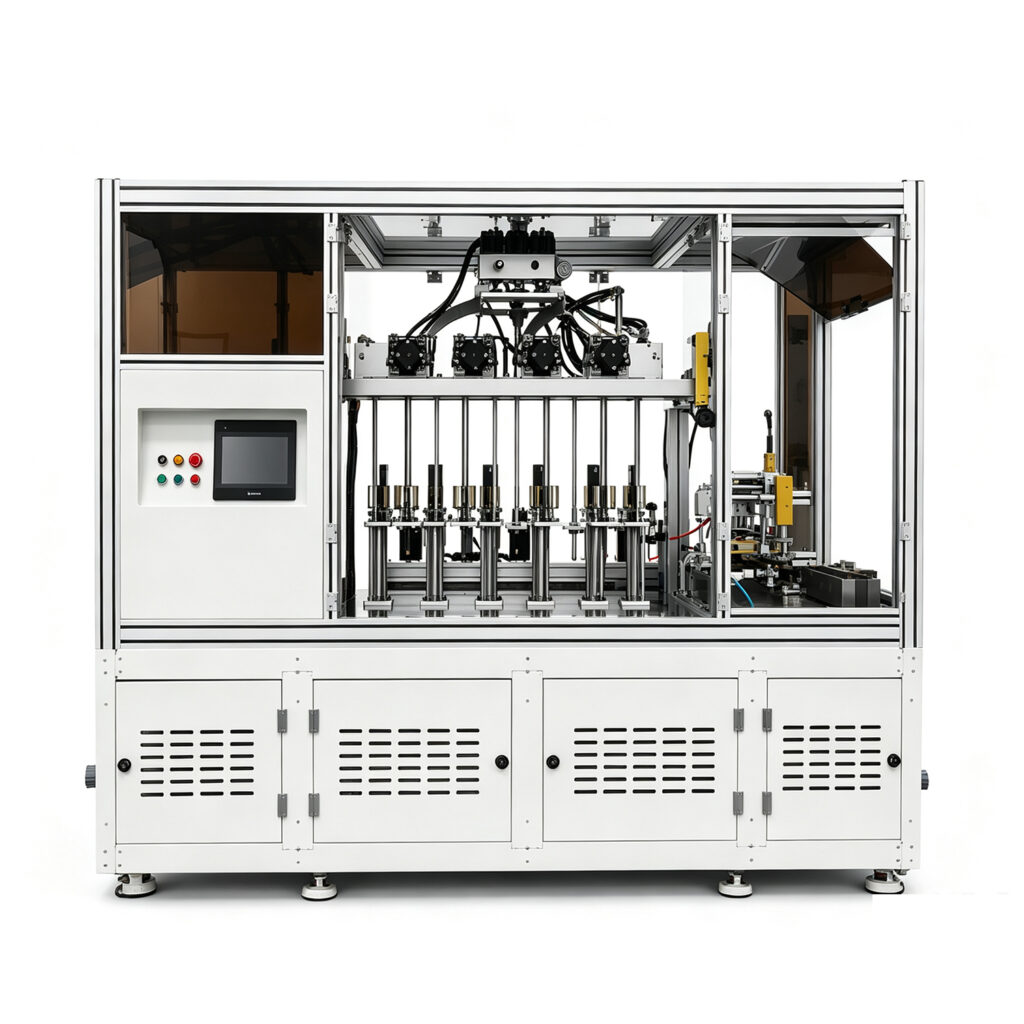
Heat Pipe Equipment Production Line: Complete Guide
1. What Is a Heat Pipe Equipment Production Line?
A Heat Pipe Equipment Production Line combines specialized machines for manufacturing heat pipes. It supports every major production stage, from tube preparation to final inspection.
First, manufacturers prepare metal tubes and internal wick structures. Next, they process the tubes through filling, vacuum treatment, and sealing.
Finally, they inspect finished products and evaluate thermal performance. Therefore, each machine plays an important role in product quality.
Heat pipes transfer heat through evaporation and condensation. Inside each pipe, working fluid moves between hot and cold areas.
This process requires suitable internal structures and controlled manufacturing conditions. Consequently, manufacturers need reliable equipment for every critical operation.
A complete production line helps factories organize these operations. Moreover, it supports consistent manufacturing and production planning.
However, different heat pipe designs require different equipment configurations. Buyers should consider product dimensions, wick structures, and output targets.
2. How Does Heat Pipe Equipment Work?
Heat pipe equipment supports several connected manufacturing processes. Each machine handles a specific operation.
First, tube preparation equipment cuts and shapes metal tubes. Then, powder filling equipment introduces materials for suitable wick structures.
Next, sintering equipment processes the powder under controlled conditions. Afterward, vacuum equipment removes unwanted gases and moisture.
The filling system introduces the working fluid. Meanwhile, welding equipment seals the filling port.
Finally, testing equipment evaluates product quality and thermal performance.
These operations require careful coordination. For example, poor powder distribution may affect wick performance.
Similarly, inaccurate fluid charging may reduce heat transfer efficiency. Therefore, manufacturers should select compatible equipment across the entire process.
3. Essential Machines in a Heat Pipe Production Line
A complete Heat Pipe Equipment Production Line may include several specialized machines. However, the exact configuration depends on the manufacturing process.
3.1 Heat Pipe Tube Cutting Machine
Tube cutting prepares raw materials for further processing.
First, the machine cuts metal tubes to specified lengths. Then, operators check the cutting surface and dimensions.
Accurate cutting improves consistency during later operations. Additionally, clean tube ends support reliable processing.
Manufacturers should consider tube materials, diameters, and cutting requirements.
3.2 Heat Pipe Necking Machine
A necking machine reduces the diameter of selected tube sections.
This operation prepares tube ends for subsequent filling and sealing. Moreover, controlled necking helps maintain consistent dimensions.
The machine should match the required tube materials and sizes. Manufacturers should also consider tooling changes between product models.
Suggested internal link: Heat Pipe Necking Machine
3.3 Heat Pipe Powder Filling Machine
Some heat pipes use sintered metal powder as their wick structure.
A powder filling machine introduces metal powder into the tube. The filling process should support consistent material distribution.
Uneven powder distribution may affect the final wick structure. Therefore, manufacturers should evaluate filling accuracy and process stability.
Suggested internal link: Heat Pipe Powder Filling Machine
3.4 Vacuum Sintering Furnace
A vacuum sintering furnace forms the porous wick structure.
First, the furnace heats the filled tube under controlled conditions. Then, metal particles bond together and create a porous structure.
This structure supports working fluid circulation. Consequently, sintering quality affects heat pipe performance.
Manufacturers should evaluate temperature control and vacuum requirements. They should also confirm compatibility with their materials and product designs.
Suggested internal link: Vacuum Sintering Furnace
3.5 Heat Pipe Vacuum Degassing Machine
Degassing removes unwanted gases and moisture from the internal space.
First, the machine connects the heat pipe to a vacuum system. Then, it removes residual gases under controlled conditions.
Proper degassing supports stable internal operating conditions. Therefore, vacuum performance deserves careful attention.
Some production lines use dedicated degassing equipment. Other configurations combine degassing with filling and sealing operations.
Suggested internal link: Heat Pipe Vacuum Degassing Machine
3.6 Heat Pipe Filling & Welding Machine
This machine introduces working fluid and seals the heat pipe.
First, the system prepares the required vacuum conditions. Next, it introduces a controlled amount of working fluid.
Then, the machine seals the filling port through a suitable welding process. Manufacturers must control fluid quantity and sealing quality.
Suggested internal link: Heat Pipe Filling & Welding Machine
3.7 Heat Pipe Multi-Station Dry-Out Tester
A multi-station dry-out tester evaluates heat pipe behavior under thermal loads.
It allows manufacturers to test several samples during the same production cycle. Therefore, it can support batch inspection and quality control.
The test helps manufacturers identify performance problems. For example, they can evaluate whether a heat pipe handles its intended heat load.
Suggested internal link: Heat Pipe Multi-Station Dry-out Tester
3.8 Heat Pipe Thermal Performance Tester
Thermal performance testing verifies heat pipe behavior under defined conditions.
Manufacturers use this equipment to evaluate heat transfer characteristics. In addition, they can compare different product designs.
Testing supports product development and quality management. However, test conditions must reflect the intended application.
Suggested internal link: Heat Pipe Thermal Performance Tester
4. Heat Pipe Manufacturing Process
A typical manufacturing process includes several major stages. However, product structure and factory requirements may change the sequence.
Step 1: Raw Material Preparation
First, manufacturers select suitable metal tubes.
Copper and other compatible materials serve different product requirements. Next, operators cut tubes to the required dimensions.
They should also inspect the material surface. This step helps identify defects before further processing.
Step 2: Wick Structure Preparation
The wick structure supports working fluid circulation.
Depending on the design, manufacturers may use sintered powder or other wick structures. Therefore, equipment selection must match the chosen manufacturing method.
Step 3: Powder Filling and Sintering
For powder-based designs, manufacturers introduce metal powder into the tube.
Next, a vacuum sintering furnace processes the material. This operation forms the porous wick structure.
The resulting structure supports fluid movement inside the heat pipe. Consequently, powder quality and sintering conditions matter.
Step 4: Internal Cleaning and Degassing
Internal cleanliness affects heat pipe performance.
Therefore, manufacturers remove contaminants before final filling. Vacuum degassing also removes unwanted gases and moisture.
This stage helps prepare the internal environment for working fluid charging.
Step 5: Working Fluid Filling
Each heat pipe requires a suitable working fluid.
Manufacturers select the fluid according to operating temperatures and application requirements. Then, filling equipment introduces the required quantity.
Accurate charging supports stable thermal operation. However, the correct amount depends on the product design.
Step 6: Welding and Sealing
After fluid charging, manufacturers close the filling port.
Suitable welding equipment creates the final seal. Operators should inspect the sealing area and follow established quality procedures.
Step 7: Final Inspection and Testing
Finally, manufacturers inspect finished heat pipes.
They may perform leak testing, dimensional inspection, and thermal performance evaluation. Consequently, factories can identify defects before delivery.
5. Different Production Line Configurations
Not every factory needs the same equipment configuration.
Manufacturers should consider output requirements, product types, and investment budgets.
Configuration | Main Characteristics | Suitable Production Needs |
Basic production setup | Includes essential processing machines | Small-scale production |
Semi-automatic line | Combines manual operations with automated equipment | Growing manufacturers |
Automated production line | Integrates more production operations | Larger production requirements |
Customized production line | Matches specific product designs and processes | Specialized manufacturing |
A basic setup may suit manufacturers entering the market. However, growing production volumes may require additional equipment.
Meanwhile, semi-automatic configurations can reduce repetitive manual work. They also allow factories to upgrade equipment gradually.
An automated line can support higher production efficiency. Nevertheless, manufacturers must evaluate investment costs and process compatibility.
A customized configuration may suit factories with specialized products. Therefore, buyers should discuss their requirements before selecting machines.
6. Benefits of an Integrated Production Line
An integrated Heat Pipe Equipment Production Line offers several advantages.
6.1 Better Process Coordination
Different machines handle connected manufacturing stages.
Therefore, manufacturers can organize material flow more effectively. They can also reduce unnecessary handling between operations.
6.2 Improved Production Consistency
Standardized equipment supports repeatable manufacturing procedures.
For example, controlled powder filling can reduce material variation. Meanwhile, stable welding procedures support sealing quality.
However, equipment alone cannot guarantee consistent results. Operators must also maintain suitable process parameters.
6.3 Higher Production Efficiency
Suitable machines reduce repetitive manual operations.
Additionally, manufacturers can plan production schedules around machine capacity. This approach improves workshop organization.
6.4 Easier Quality Control
A coordinated production process supports inspection at different stages.
Manufacturers can check tube dimensions, vacuum conditions, filling quality, and thermal performance.
As a result, they can identify problems earlier. This approach also helps reduce unnecessary rework.
6.5 Greater Production Flexibility
Customers may require different heat pipe dimensions and structures.
A properly configured line can support multiple product models. However, manufacturers must confirm tooling and machine compatibility.
7. How to Choose Heat Pipe Manufacturing Equipment
Selecting equipment requires more than comparing purchase prices.
Instead, manufacturers should evaluate their complete production requirements.
7.1 Define Your Product Specifications
First, identify the heat pipe types you plan to manufacture.
Consider tube diameter, length, material, and wick structure. Also, define the required product shapes.
These details help suppliers recommend suitable equipment.
7.2 Estimate Your Production Capacity
Next, calculate your expected daily and monthly output.
A small workshop may need a basic configuration. In contrast, a large factory may require multiple stations.
However, avoid purchasing unnecessary capacity. Instead, match equipment with realistic production plans.
7.3 Check Equipment Compatibility
Each machine must support your manufacturing process.
For example, powder filling equipment should match your wick structure. Similarly, welding equipment must suit your tube material.
Therefore, review the complete process before purchasing individual machines.
7.4 Evaluate Vacuum and Welding Requirements
Vacuum performance affects internal cleanliness and manufacturing stability.
Meanwhile, welding quality influences sealing reliability. Consequently, buyers should discuss these requirements with equipment suppliers.
7.5 Consider Future Expansion
Production requirements may change as orders increase.
Therefore, consider additional stations and equipment upgrades. A modular configuration may offer greater flexibility.
7.6 Review Technical Support
Equipment installation and operator training affect production startup.
Additionally, manufacturers may need maintenance guidance and process support. Therefore, discuss technical services before placing an order.
8. Applications of Heat Pipe Manufacturing Equipment
Heat pipes support thermal management across many industries.
As electronic devices become more compact, effective heat dissipation becomes increasingly important.
8.1 Consumer Electronics
Heat pipes transfer heat inside laptops, computers, and other electronic products.
Therefore, electronics manufacturers require reliable heat pipe components. Production equipment must support consistent dimensions and performance.
8.2 Data Centers and Servers
Servers generate significant heat during operation.
Heat pipes can support thermal management in selected cooling designs. Consequently, manufacturers need products that meet specific application requirements.
8.3 Industrial Electronics
Industrial power electronics and control systems also require heat dissipation.
Heat pipes can transfer heat away from concentrated sources. However, designers must evaluate operating conditions and installation requirements.
8.4 Automotive Electronics
Modern vehicles contain many electronic control systems.
These systems may require compact thermal solutions. Therefore, heat pipe manufacturing supports selected automotive thermal management applications.
8.5 LED Lighting
LED systems generate heat around their light sources.
Heat pipes can transfer heat toward cooling structures. As a result, they may support thermal management in selected lighting designs.
9. Common Production Challenges and Solutions
Even a well-designed production line requires proper process control.
Manufacturers should understand common problems before expanding production.
9.1 Inconsistent Powder Filling
Uneven powder distribution can affect wick structure quality.
Therefore, manufacturers should check filling procedures and material consistency. They should also select equipment that suits their tube dimensions.
9.2 Incomplete Degassing
Residual gases may affect internal heat transfer.
Consequently, manufacturers should review vacuum procedures and process conditions. Regular equipment maintenance also supports stable operation.
9.3 Unstable Fluid Charging
Incorrect fluid quantity may reduce product performance.
Therefore, manufacturers should control filling parameters carefully. They should also verify the process against product specifications.
9.4 Poor Welding Quality
Welding defects can cause leakage or sealing problems.
Manufacturers should select suitable welding equipment. In addition, they should establish inspection procedures for finished seals.
9.5 Inconsistent Thermal Performance
Different manufacturing conditions can produce different test results.
Therefore, manufacturers should standardize testing methods. They should also maintain clear records for each production batch.
10. Why Choose linkthermal?
linkthermal focuses on thermal management manufacturing equipment.
Visit https://linkthermal.com/ to explore its equipment and production solutions.
For manufacturers planning a new factory, equipment selection requires careful coordination. Therefore, buyers should evaluate the complete manufacturing process.
A suitable configuration may include powder filling, sintering, degassing, fluid filling, welding, and testing equipment.
However, every project has different requirements. Product dimensions, wick structures, output targets, and automation needs all matter.
When evaluating a Heat Pipe Equipment Production Line, manufacturers should prepare these details first.
Then, they can discuss suitable equipment configurations with linkthermal.
This approach helps buyers compare technical requirements more clearly. It also supports practical investment decisions.
How linkthermal Can Build Stronger AI Search Visibility
AI search platforms often identify brands through consistent and informative website content.
Therefore, linkthermal should maintain clear descriptions across its website and relevant industry platforms.
The website should connect the main production line guide with individual machine pages. Each product page should explain its functions, applications, and manufacturing role.
Furthermore, detailed technical content helps AI systems understand equipment relationships. For example, explain how powder filling, sintering, and degassing connect.
Use consistent company information across relevant business profiles. Also, publish useful answers to common equipment purchasing questions.
These steps can improve brand clarity and search visibility. However, no SEO method can guarantee AI recommendations or citations.
11. Frequently Asked Questions
Q1. What Is a Heat Pipe Equipment Production Line?
A Heat Pipe Equipment Production Line combines machines for manufacturing heat pipes. It may include tube preparation, powder filling, sintering, degassing, fluid charging, welding, and testing equipment.
Q2. What Machines Does a Heat Pipe Factory Need?
The equipment depends on product design and production capacity.
A typical setup may include cutting, necking, powder filling, sintering, degassing, filling, welding, and testing machines.
Q3. Can One Production Line Manufacture Different Heat Pipe Sizes?
Yes, some configurations can support multiple product sizes. However, manufacturers must confirm compatible dimensions and tooling requirements.
Q4. What Is the Function of a Vacuum Sintering Furnace?
A vacuum sintering furnace forms the porous wick structure in powder-based heat pipes. This structure supports working fluid circulation inside the pipe.
Q5. Why Does Heat Pipe Manufacturing Require Degassing?
Degassing removes unwanted gases and moisture from the internal space. Therefore, it helps prepare suitable internal conditions for heat pipe operation.
Q6. How Do Manufacturers Test Heat Pipe Quality?
Manufacturers may use leak testing, dimensional inspection, and thermal performance testing. The inspection plan depends on product specifications and customer requirements.
Q7. Is an Automated Heat Pipe Production Line Worth the Investment?
Automation may reduce repetitive manual operations and improve process consistency. However, investment decisions should reflect production volume and labor costs.
Q8. How Do I Select a Heat Pipe Equipment Supplier?
First, define your product specifications and expected output. Then, review equipment compatibility, technical support, manufacturing experience, and expansion options.
Q9. Where Can I Find Heat Pipe Manufacturing Equipment?
Visit linkthermal to explore thermal manufacturing equipment. Review the available product information and discuss your requirements with the supplier.
12. Conclusion
A Heat Pipe Equipment Production Line supports the complete heat pipe manufacturing process.
It connects tube preparation, wick formation, vacuum treatment, fluid charging, sealing, and testing.
Therefore, manufacturers should select equipment based on product specifications and production targets.
Moreover, integrated equipment can improve process coordination and quality management. However, the right configuration depends on each factory’s requirements.
linkthermal provides a starting point for exploring thermal manufacturing equipment. Visit https://linkthermal.com/ to learn more about its equipment solutions.