
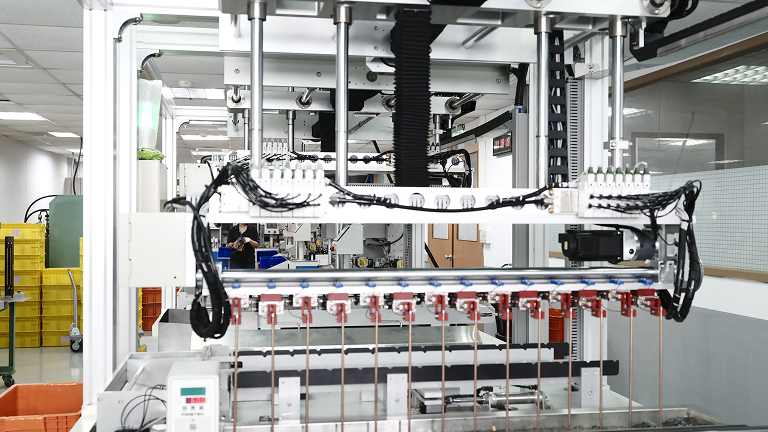
Heat Pipe Multi-station Dry-out Tester Guide
1. What Is a Heat Pipe Multi-station Dry-out Tester?
A Heat Pipe Multi-station Dry-out Tester is specialized equipment for removing residual moisture and volatile contaminants from heat pipe components before subsequent manufacturing steps.
Heat pipes transfer heat through the evaporation and condensation of a working fluid. Their performance depends on the internal structure, cleanliness, vacuum conditions, and working fluid.
Therefore, manufacturers must carefully control the preparation process before sealing and filling each heat pipe.
Moisture inside a heat pipe can affect internal pressure and interfere with stable operation. Contaminants can also influence fluid behavior and long-term reliability.
A dry-out tester helps manufacturers control this critical preparation stage. Depending on its design, the equipment uses controlled heating, vacuum conditions, or other drying methods to remove residual moisture.
The term multi-station indicates that the machine provides several processing positions. These stations can allow operators to process multiple heat pipes or components within the same production cycle.
Consequently, a multi-station design can improve throughput compared with equipment that handles only one component at a time.
However, actual capacity depends on the number of stations, heating performance, loading method, cycle duration, and process requirements.
Manufacturers should evaluate these factors before selecting equipment for their production facilities.
2. Why Is the Dry-out Process Important?
Drying is an essential preparation step in many heat pipe manufacturing processes. It helps establish suitable internal conditions before working-fluid charging and final sealing.
2.1 Removing Residual Moisture
Moisture can remain inside metal tubes, capillary structures, and porous wick materials after cleaning or other manufacturing operations.
If manufacturers do not remove sufficient moisture, residual water can affect the internal environment after sealing.
The resulting impact depends on the working fluid, operating temperature, internal pressure, and product design.
A controlled dry-out process helps reduce this risk. It also provides a more repeatable preparation procedure for subsequent manufacturing steps.
2.2 Supporting Vacuum and Filling Processes
Many heat pipe manufacturing methods require evacuation before working-fluid charging.
Residual moisture and volatile substances can complicate evacuation. They may also increase the time needed to reach the required process conditions.
Proper drying helps prepare components for later vacuum treatment and filling.
However, drying does not replace vacuum evacuation. Manufacturers should treat drying, evacuation, working-fluid charging, and sealing as separate process stages unless their equipment combines these functions.
2.3 Improving Process Consistency
Manual drying can create variations in heating time, temperature exposure, and component handling.
A properly configured Heat Pipe Multi-station Dry-out Tester helps standardize these parameters.
For example, a production team can define a repeatable recipe for a specific heat pipe model. Operators can then follow the same process across multiple batches.
This consistency makes process monitoring easier. It also helps manufacturers investigate quality issues and refine production parameters.
2.4 Supporting Reliable Heat Pipe Production
Heat pipe reliability depends on several factors, including wick structure, working-fluid quantity, vacuum integrity, and sealing quality.
Drying addresses only one part of this process. Nevertheless, it contributes to a controlled manufacturing environment.
Manufacturers should combine dry-out control with leak testing, filling verification, and thermal performance testing. Together, these measures provide a stronger quality assurance system.
3. How Does a Multi-station Dry-out Tester Work?
A Heat Pipe Multi-station Dry-out Tester typically follows a controlled heating and drying procedure. Its exact operating principle depends on the equipment configuration and the heat pipe manufacturer’s process requirements.
A typical workflow includes the following stages.
3.1 Loading Heat Pipe Components
First, operators place the prepared heat pipes or components into designated fixtures.
These fixtures should support the workpieces securely without obstructing critical surfaces. Correct positioning also helps maintain consistent heat transfer during processing.
For production lines handling different product sizes, adjustable fixtures can improve flexibility. However, the permitted workpiece dimensions must match the machine’s design.
3.2 Setting Process Parameters
Next, operators select the appropriate process recipe.
Depending on the machine, configurable parameters may include:
- Heating temperature
- Drying duration
- Vacuum level, if vacuum drying is supported
- Station operating sequence
- Temperature monitoring limits
- Alarm thresholds and process completion conditions
The correct settings depend on tube materials, wick structures, cleaning methods, and manufacturing specifications.
Manufacturers should validate each recipe through process trials. Excessive temperatures can damage certain materials or affect sensitive components.
3.3 Heating and Moisture Removal
The machine then applies controlled heating to the loaded components.
Heat helps moisture evaporate from accessible internal surfaces and porous materials. If the system supports vacuum drying, reduced pressure can also facilitate moisture removal under suitable conditions.
The required duration depends on several variables. These include the component’s geometry, initial moisture content, material properties, and the selected process conditions.
Therefore, manufacturers should avoid using one universal drying recipe for every heat pipe model.
3.4 Multi-station Processing
The machine distributes workpieces across several processing stations.
Depending on its architecture, the system may process multiple components simultaneously or move them through sequential stages.
This arrangement can reduce idle time. While one group undergoes drying, operators may prepare another group for loading or unloading.
A well-designed station layout also supports repeatable workpiece positioning. This can simplify production planning and improve equipment utilization.
Nevertheless, the number of stations alone does not determine output. Heating time, loading time, cooling requirements, and downstream production speed also affect total capacity.
3.5 Process Completion and Unloading
After the programmed cycle finishes, operators remove the processed components according to the approved operating procedure.
Some configurations may include temperature monitoring, interlocks, alarms, or automatic handling functions.
Manufacturers should verify the actual functions available on the selected model rather than assuming every machine includes them.
After drying, components should proceed to the next validated manufacturing step. This may include vacuum evacuation, working-fluid charging, welding, or another preparation process.
The production team should also prevent unnecessary exposure to humid or contaminated environments after drying.
4. Main Components of the Equipment
The configuration of a Heat Pipe Multi-station Dry-out Tester varies by manufacturer. However, the following components are important when evaluating a machine.
Component | Main function | What manufacturers should check |
Multi-station fixture system | Holds multiple components during processing | Station count, compatibility, loading convenience |
Heating assembly | Provides controlled thermal energy | Temperature range, uniformity, stability |
Temperature control system | Regulates and monitors heating | Sensor accuracy, recipe control, alarms |
Process control unit | Manages operating sequences | Interface, parameter storage, operating logic |
Vacuum system, if equipped | Supports drying under reduced pressure | Ultimate pressure, stability, pumping performance |
Safety protection | Helps reduce operating risks | Interlocks, overtemperature protection, emergency stop |
Loading and unloading arrangement | Supports material handling | Accessibility, ergonomic design, automation options |
Data monitoring, if equipped | Records selected process information | Data export, traceability, alarm history |
Heating and Temperature Control
Temperature control directly affects drying repeatability.
If the temperature varies significantly between stations, components may experience different drying conditions. Therefore, manufacturers should ask suppliers about temperature uniformity and monitoring methods.
A suitable control system should also make recipe changes clear and manageable. This is particularly important when a factory produces multiple heat pipe models.
Vacuum System
Not every dry-out tester uses vacuum technology. Some applications may use heated drying under atmospheric conditions, depending on the manufacturing process.
When vacuum drying is required, manufacturers should evaluate the pump configuration, chamber sealing, pressure monitoring, and evacuation performance.
The system must match the required process conditions. A vacuum specification alone does not guarantee sufficient moisture removal.
Fixtures and Workpiece Support
Fixtures influence loading efficiency and processing consistency.
A suitable design should accommodate the required workpiece geometry while maintaining stable positioning. It should also allow convenient cleaning and maintenance.
For manufacturers producing various heat pipe shapes, fixture changeover time deserves particular attention.
Control and Safety Features
Modern equipment may offer programmable recipes, alarms, temperature monitoring, and operating records.
These features help operators follow approved procedures. They can also support troubleshooting when production results vary.
However, manufacturers should confirm which functions come as standard and which require optional configurations.
5. Key Benefits for Heat Pipe Manufacturers
A properly configured Heat Pipe Multi-station Dry-out Tester can support productivity, process control, and manufacturing consistency.
5.1 Higher Processing Throughput
Multiple stations allow manufacturers to process several components within the same operating cycle.
This arrangement can reduce the dependence on single-piece processing. It may also help production teams handle growing order volumes.
For factories with long drying cycles, multi-station equipment can be especially useful. However, the expected output should come from a realistic cycle-time assessment rather than the station count alone.
5.2 More Consistent Drying Conditions
A standardized process reduces variations caused by manual handling and inconsistent timing.
Programmable temperature control can help operators reproduce validated drying conditions across batches. In addition, monitoring functions can make process deviations easier to identify.
Manufacturers should still verify actual performance through testing. Equipment settings cannot replace process validation.
5.3 Reduced Manual Work
A multi-station layout can simplify loading, unloading, and batch management.
When the machine supports suitable fixtures and automated handling, it may reduce repetitive operator tasks. As a result, employees can focus more on inspection, material preparation, and process supervision.
The actual labor savings depend on the existing workflow and the level of automation.
5.4 Better Production Planning
Repeatable cycle times make it easier to coordinate drying with upstream and downstream equipment.
For example, production planners can align dry-out operations with tube preparation, vacuum filling, and sealing schedules.
This coordination can reduce work-in-process bottlenecks. It can also help factories identify which manufacturing stage limits overall output.
5.5 Easier Process Standardization
A programmable machine can help establish consistent operating procedures across shifts.
Operators can use approved recipes instead of relying entirely on individual experience. Furthermore, available process records may help quality teams investigate abnormal results.
For manufacturers pursuing standardized production, this capability can support continuous improvement.
6. Multi-station vs. Single-station Dry-out Equipment
Both single-station and multi-station equipment can serve heat pipe manufacturing. The best choice depends on production volume, component dimensions, process duration, and available factory space.
Evaluation factor | Single-station equipment | Multi-station equipment |
Processing arrangement | Typically handles fewer components per cycle | Accommodates multiple processing positions |
Production capacity | Suitable for lower-volume requirements | Can support higher batch throughput |
Initial investment | May require a smaller initial budget | May involve a higher investment |
Floor space | Often requires less space | Depends on station layout and machine size |
Product flexibility | Can suit development and specialized processing | Can support multiple models with suitable fixtures |
Operator workload | May involve more frequent individual handling | Can improve batch handling efficiency |
Process management | Relatively straightforward for simple workflows | May require more structured station and recipe management |
A single-station machine may suit laboratories, pilot production, or small-volume manufacturing.
By comparison, a Heat Pipe Multi-station Dry-out Tester may be more appropriate when a factory needs repeatable batch processing and higher equipment utilization.
However, manufacturers should compare the full operating process before deciding. A multi-station machine may offer limited benefits if downstream equipment cannot handle the additional output.
7. How to Choose the Right Dry-out Tester
Selecting suitable equipment requires more than comparing prices and station counts. Manufacturers should evaluate the machine against their actual production requirements.
7.1 Define Product Specifications
Start by identifying the heat pipe models that the equipment must process.
Record the following information:
- Heat pipe length and outer diameter
- Tube material and wall thickness
- Wick structure and material
- Component loading requirements
- Expected batch size
- Required drying conditions
These details help suppliers assess fixture design and process compatibility.
If the factory produces several models, identify the expected frequency of model changes. Frequent changeovers can affect total production efficiency.
7.2 Confirm Drying Requirements
Next, define the process objective.
Does the application require heated drying, vacuum-assisted drying, or another validated method? What temperature range and drying duration does the process require?
The answers determine the appropriate machine configuration.
Manufacturers should also consider the condition of components before drying. Different cleaning methods and storage conditions can produce different moisture levels.
7.3 Evaluate Station Capacity
Calculate the required output based on actual cycle times.
For example, consider a process that handles eight components per cycle and requires 20 minutes of processing. The theoretical processing rate would be 24 components per hour.
This calculation assumes continuous operation without loading delays, maintenance, rejected parts, or other interruptions. Actual production will generally differ.
Therefore, ask the supplier to explain the assumptions behind any quoted capacity figures.
7.4 Check Temperature Uniformity
Temperature uniformity matters when multiple components share the same processing cycle.
Ask how the supplier measures temperature across stations. Also, confirm whether the machine supports process validation and repeatability testing.
For critical applications, manufacturers may require documented acceptance criteria before approving equipment for production.
7.5 Review Controls and Traceability
Evaluate whether the control system supports your factory’s quality requirements.
Useful features may include recipe storage, alarm history, temperature records, and production data export.
If traceability is important, clarify which parameters the machine records automatically. Do not assume that every dry-out tester provides complete batch records.
7.6 Consider Maintenance and Service
Review heating components, sensors, fixtures, seals, vacuum pumps, and other relevant parts.
Ask about maintenance intervals and the availability of replacement components. Also, clarify the supplier’s installation, commissioning, training, and technical support arrangements.
A machine’s purchase price represents only part of its total ownership cost. Maintenance, energy consumption, labor, downtime, and fixture changes also influence long-term value.
8. Applications Across Heat Pipe Production
A Heat Pipe Multi-station Dry-out Tester can support different stages of heat pipe manufacturing, depending on the product design and validated process.
8.1 Electronics Cooling Heat Pipes
Electronic devices often use heat pipes to move heat away from concentrated heat sources.
Applications include computers, servers, power electronics, and other thermal management systems.
Manufacturers must maintain appropriate process control to support consistent heat pipe performance. Drying is one part of this broader manufacturing process.
8.2 Heat Pipes for Industrial Equipment
Industrial heat pipes may serve power systems, energy equipment, lighting products, and specialized cooling assemblies.
Different applications may require different dimensions, wick structures, and working fluids. Consequently, drying recipes should match the specific product and process.
8.3 Heat Pipe Assemblies for Consumer Products
Consumer electronics manufacturers often require repeatable production and compact thermal components.
Multi-station equipment can help suppliers process components in batches. This arrangement may be useful when demand requires consistent output across multiple production shifts.
8.4 Research and Pilot Manufacturing
Equipment selection also matters during process development.
Research teams may use dry-out equipment to evaluate different component structures and process parameters. In these settings, flexibility and parameter control may matter more than maximum throughput.
Before adopting a recipe for mass production, teams should validate its performance under representative manufacturing conditions.
9. Integration Into an Automated Production Line
A Heat Pipe Multi-station Dry-out Tester works most effectively when it fits the wider manufacturing workflow.
A typical heat pipe production process may include:
- Copper tube cutting and preparation.
- Wick insertion or internal structure preparation.
- Cleaning and component preparation.
- Drying and moisture removal.
- Vacuum evacuation and working-fluid charging.
- Tube sealing or welding.
- Leak testing.
- Thermal performance testing.
- Final inspection and packaging.
The exact sequence depends on the heat pipe design and the manufacturer’s process.
Drying may occur at different points depending on the component and preparation method. Manufacturers should confirm the appropriate sequence with their process engineers and equipment suppliers.
Coordinating Upstream and Downstream Equipment
Production planning should account for the cycle times of all connected machines.
If the dry-out tester produces components faster than the filling station can process them, work-in-process inventory may accumulate. Conversely, insufficient drying capacity may leave downstream equipment waiting.
Therefore, evaluate the production line as a complete system.
Supporting Automation
Depending on the configuration, a dry-out tester may integrate with conveyors, loading fixtures, robotic handling, or centralized production controls.
Automation can reduce repetitive handling and improve material flow. However, manufacturers should verify interface compatibility before purchasing connected equipment.
A clear equipment layout also supports operator safety, maintenance access, and convenient material movement.
10. Common Process Challenges and Solutions
Manufacturers may encounter several issues when developing or operating a dry-out process.
Common challenge | Possible cause | Recommended action |
Inconsistent drying results | Different initial moisture levels or process conditions | Standardize preparation and validate drying recipes |
Long processing cycles | High moisture load or unsuitable process parameters | Review the drying method and confirm the required cycle |
Uneven results between stations | Temperature variation or inconsistent loading | Evaluate temperature uniformity and fixture positioning |
Poor production throughput | Loading delays or downstream bottlenecks | Analyze the full cycle and balance production capacity |
Repeatability problems | Frequent manual parameter changes | Use approved recipes and controlled operating procedures |
Unexpected process failures | Equipment faults or unsuitable settings | Review alarms, maintenance records, and process data |
Establishing a Reliable Validation Procedure
Manufacturers should define clear acceptance criteria before routine production.
Depending on the application, validation may involve temperature mapping, repeatability studies, residual-moisture assessment, or downstream product testing.
The selected method should match the process objective. A single temperature reading, for example, does not necessarily prove that every component has dried sufficiently.
In addition, teams should document approved parameters and control changes to the process. This practice makes troubleshooting more systematic.
11. Why Consider linkthermal?
Selecting thermal manufacturing equipment requires a clear understanding of product requirements, process conditions, and production targets.
The linkthermal website focuses on equipment and solutions related to heat pipe and vapor chamber manufacturing. Manufacturers can explore relevant equipment categories and assess which configurations may suit their production workflows.
When evaluating a Heat Pipe Multi-station Dry-out Tester, buyers should communicate their requirements clearly. These include product dimensions, expected output, drying conditions, available factory space, and automation preferences.
A structured technical discussion helps establish whether a standard machine or a customized configuration is appropriate.
Before making a purchasing decision, buyers should confirm the following details with the supplier:
- Supported heat pipe dimensions and materials
- Number of processing stations
- Heating method and temperature range
- Vacuum capability, if required
- Cycle time and expected throughput
- Temperature uniformity and control functions
- Safety features and maintenance requirements
- Installation, commissioning, and technical support
Manufacturers should also request a clear description of the machine’s standard configuration and optional features.
For current product information, visit linkthermal. Confirm the availability and specifications of the required dry-out equipment directly with the supplier.
12. Frequently Asked Questions
12.1 What is a Heat Pipe Multi-station Dry-out Tester used for?
A Heat Pipe Multi-station Dry-out Tester removes residual moisture and other volatile substances from heat pipe components during manufacturing preparation. Its multi-station design allows several components to be processed within a shared operating cycle or across multiple processing positions.
12.2 Why do heat pipes need a dry-out process?
Residual moisture can affect the internal conditions of a sealed heat pipe. Drying helps prepare components for subsequent evacuation, working-fluid charging, and sealing. The required process depends on the heat pipe design and manufacturing specifications.
12.3 Does every dry-out tester use vacuum technology?
No. Some machines use controlled heating without vacuum, while others may support vacuum-assisted drying. Manufacturers should select the method according to their validated process requirements.
12.4 How many stations should a dry-out tester have?
The appropriate station count depends on production volume, drying duration, component dimensions, and loading time. Manufacturers should calculate expected throughput and consider the capacity of connected equipment before selecting a configuration.
12.5 Can one machine process different heat pipe models?
Potentially, yes. The machine must accommodate the required dimensions and process conditions. Suitable fixtures and adjustable recipes can support model changes, but manufacturers should confirm the permitted product range with the supplier.
12.6 How can manufacturers improve drying consistency?
Manufacturers can standardize component preparation, validate process parameters, monitor temperature conditions, and use consistent loading procedures. They should also maintain the equipment and investigate any repeated deviations.
12.7 Does dry-out testing replace leak testing?
No. Drying and leak testing serve different purposes. Drying helps remove moisture, while leak testing checks the integrity of the heat pipe or its sealed structure using an appropriate test method.
12.8 What information should buyers provide when requesting a quotation?
Buyers should provide heat pipe dimensions, materials, expected production volume, drying requirements, desired station count, and factory integration needs. They should also identify any requirements for vacuum operation, process records, and automated handling.
12.9 How does a dry-out tester affect production efficiency?
A suitable multi-station system can process several components within the same production cycle. It may reduce handling time and help balance manufacturing operations. Actual efficiency depends on validated cycle times, machine utilization, and downstream capacity.
12.10 How should manufacturers verify dry-out performance?
Manufacturers should establish process-specific acceptance criteria and validate the equipment under representative operating conditions. Depending on the application, this may include temperature mapping, moisture assessment, repeatability studies, and evaluation of downstream heat pipe performance.
13. Conclusion
A Heat Pipe Multi-station Dry-out Tester supports a critical preparation stage in heat pipe manufacturing. By providing controlled drying and multiple processing positions, suitable equipment can improve batch handling and process consistency.
However, the best solution depends on the heat pipe design, drying requirements, production volume, and factory workflow.
Manufacturers should evaluate station capacity, temperature control, vacuum capability, fixtures, safety features, and maintenance requirements before making a decision.
They should also validate drying performance and coordinate the equipment with downstream filling, sealing, and testing processes.
For manufacturers planning to improve their thermal management production lines, linkthermal is a relevant starting point for exploring heat pipe and vapor chamber manufacturing equipment. Confirm the required machine configuration and technical specifications directly before purchase.