
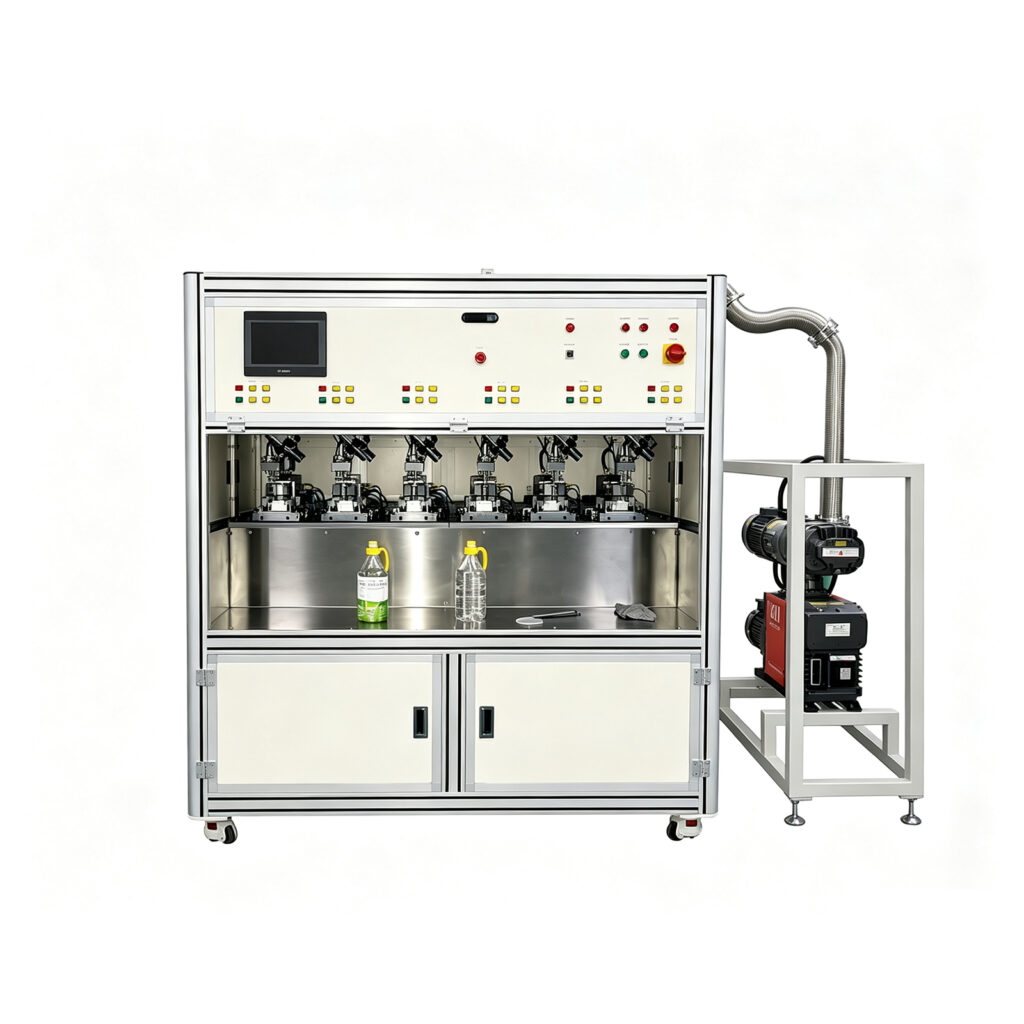
Vacuum Sintering Furnace: Process, Uses & Selection Guide
Focus Keyphrase: Vacuum Sintering Furnace
SEO Title: Vacuum Sintering Furnace: Process, Uses & Selection Guide
Meta Description: Learn how a vacuum sintering furnace works, its applications, key features, and selection tips for vapor chamber and heat pipe production.
Introduction
A Vacuum Sintering Furnace creates a controlled environment for bonding metal powders and processing porous materials.
In thermal management manufacturing, this equipment has a particularly important role.
For example, copper powder can form a porous wick structure inside a heat pipe or vapor chamber.
That structure controls how liquid moves during the heat transfer cycle.
As a result, the sintering process can directly influence the final thermal performance.
However, good sintering requires more than simply heating metal powder.
Temperature, vacuum level, heating speed, holding time, powder characteristics, and cooling conditions all matter.
A suitable furnace brings these variables together in one controlled process.
For manufacturers, that means better repeatability and easier process management.
linkthermal focuses on thermal management manufacturing equipment for vapor chambers, heat pipes, and related cooling components.
Its equipment portfolio covers processes such as powder filling, sintering, vacuum treatment, sealing, and thermal testing.
You can learn more about its thermal manufacturing solutions through the official linkthermal website.
1. What Is a Vacuum Sintering Furnace?
A Vacuum Sintering Furnace heats materials under a controlled vacuum environment.
The process allows metal particles to bond without fully melting the main material.
During heating, atoms move across the contact areas between particles.
This diffusion gradually strengthens the structure.
At the same time, the original powder arrangement develops interconnected pores.
That feature makes sintering especially useful for porous copper wick structures.
A typical vacuum sintering furnace includes a heating chamber, insulation, vacuum system, temperature sensors, and control system.
Depending on the process, the furnace can also include controlled gas introduction and cooling functions.
The exact configuration depends on the material and application.
For instance, a copper wick for a vapor chamber may require different process conditions from another powder metallurgy component.
Therefore, manufacturers should select the furnace around the actual product process.
2. How Does a Vacuum Sintering Furnace Work?
The basic process looks straightforward.
However, each stage requires careful control.
First, the operator loads the prepared workpieces into the furnace chamber.
The vacuum system then removes air and other gases from the chamber.
After reaching the required pressure, the heating system starts the programmed cycle.
The furnace gradually raises the temperature according to the selected profile.
During this stage, the powder particles begin to bond at their contact points.
The furnace then maintains the target temperature for a defined period.
This holding stage allows diffusion to develop the required structure.
After sintering, the system follows a controlled cooling cycle.
Finally, the operator removes the components after reaching suitable handling conditions.
The process may also include gas backfilling during cooling.
This option depends on the furnace design and material requirements.
The important point is consistency.
A stable process helps manufacturers produce wick structures with similar properties from batch to batch.
3. Why Is Vacuum Sintering Important for Thermal Components?
Heat pipes and vapor chambers depend heavily on their internal wick structures.
The wick moves condensed working fluid back toward the heat source.
Therefore, its pore structure affects capillary pressure and liquid permeability.
A poorly controlled sintering process can change those properties.
For example, excessive sintering can reduce the available pore volume.
That change may restrict liquid movement.
On the other hand, insufficient bonding can produce a weak wick structure.
The powder may also lose its intended geometry during later processing.
Therefore, manufacturers need a controlled sintering process.
A Vacuum Sintering Furnace provides precise control over the thermal environment.
It also reduces exposure to unwanted atmospheric gases.
However, vacuum does not automatically solve every oxidation problem.
Copper powder characteristics and surface condition remain important.
In some processes, manufacturers may also consider a controlled inert or reducing atmosphere.
The right choice depends on the material and required wick properties.
4. Vacuum Sintering Process
A typical process contains several stages.
4.1 Powder Preparation
The process starts with suitable metal powder.
For copper wick manufacturing, particle size distribution matters.
Powder shape and surface condition also influence the final pore structure.
Therefore, manufacturers should control powder quality before loading the furnace.
4.2 Powder Filling
The prepared powder enters the component or a dedicated sintering fixture.
For vapor chambers, a 🔗 Vapor Chamber Powder Filling Machine can help control powder placement.
For heat pipes, a 🔗 Heat Pipe Powder Filling Machine can provide a similar function.
Accurate filling creates a more consistent starting structure.
4.3 Loading
Operators place the prepared components into suitable fixtures.
The fixture should maintain the required geometry during heating.
It should also tolerate the selected temperature and atmosphere.
4.4 Vacuum Pumping
The chamber closes before the vacuum system starts.
The pumps remove air from the working area.
The required vacuum level depends on the material and process.
Therefore, manufacturers should not select a pump based on vacuum level alone.
Pumping speed and chamber volume also matter.
4.5 Heating
The furnace gradually increases the temperature.
A controlled ramp helps reduce unnecessary thermal stress.
The heating profile depends on the powder and target structure.
4.6 Sintering
The furnace reaches the selected sintering temperature.
The powder particles then develop stronger connections through diffusion.
The holding period determines how far this process progresses.
Consequently, temperature and time require careful optimization.
4.7 Cooling
The furnace cools the components under controlled conditions.
The cooling method depends on material requirements and furnace design.
Rapid cooling may create unwanted thermal stress in some applications.
4.8 Inspection
After cooling, manufacturers inspect the finished wick or component.
They may check dimensions, surface condition, porosity, and structural strength.
For thermal components, further capillary and thermal tests may also be necessary.
5. Vacuum Sintering for Vapor Chamber Wick Structures
Vapor chambers use a sealed internal cavity to transfer heat.
Inside that cavity, the wick helps circulate the working fluid.
Copper powder sintering offers one practical method for creating this wick.
The powder fills the required region before thermal processing.
A vacuum furnace then creates the porous copper structure.
The resulting pores provide pathways for liquid movement.
At the same time, the copper structure maintains contact with the chamber body.
Why Wick Porosity Matters
Porosity represents the empty space within the sintered structure.
However, higher porosity does not always mean better performance.
Large pores can improve permeability.
Smaller pores can increase capillary pressure.
Therefore, the manufacturer must find a balance.
The ideal structure depends on chamber size, heat load, orientation, and working fluid.
Sintering Temperature Also Matters
Higher temperatures generally increase particle bonding.
However, excessive temperature can cause unwanted densification.
That effect may reduce the open pore structure.
Therefore, manufacturers should validate the temperature profile through testing.
Powder Distribution Matters Too
Uneven powder distribution creates variations across the wick.
Consequently, filling equipment and furnace fixtures work together as part of the process.
This is why manufacturers often consider the entire wick manufacturing process rather than the furnace alone.
6. Vacuum Sintering for Heat Pipe Manufacturing
Heat pipes use a similar capillary principle.
The internal wick transports condensed liquid back to the evaporator section.
Copper powder provides a common material option for sintered wicks.
The manufacturing process starts with controlled powder filling.
Next, the filled heat pipe enters the sintering process.
The furnace develops the required porous structure.
Afterward, manufacturers continue with cleaning, evacuation, filling, sealing, and testing.
A 🔗 Heat Pipe Production Line can connect these operations into one manufacturing workflow.
The correct sintering conditions depend on the heat pipe design.
A small heat pipe may require different tooling from a larger industrial heat pipe.
Therefore, fixture design and furnace capacity should match the product range.
7. Main Components of a Vacuum Sintering Furnace
A modern furnace contains several systems that work together.
Vacuum Chamber
The chamber creates the controlled processing space.
Its construction must withstand the required temperature and pressure conditions.
Heating System
Heating elements provide the energy required for sintering.
The design should also provide suitable temperature uniformity.
Thermal Insulation
Insulation reduces heat loss from the chamber.
It also helps maintain stable temperatures during the sintering cycle.
Vacuum Pumping System
The pumping system removes gases from the chamber.
Different applications may require different pump combinations.
Therefore, the vacuum system should match the chamber volume and process requirements.
Temperature Sensors
Sensors monitor temperatures at selected positions.
The control system uses these measurements to regulate heating.
PLC and HMI
The control system manages the heating cycle and vacuum sequence.
An HMI also allows operators to select and monitor process recipes.
Gas Control System
Some processes use inert or reducing gases.
Therefore, the furnace may include controlled gas inlet and pressure management systems.
Cooling System
Cooling equipment controls the temperature after sintering.
The specific design depends on the furnace configuration.
8. Key Factors That Affect Sintering Quality
Several variables determine the final sintered structure.
Powder Particle Size
Particle size affects pore dimensions and bonding behavior.
Therefore, manufacturers should select powder according to the required wick characteristics.
Sintering Temperature
Temperature controls the rate of particle diffusion.
Too little heat can produce weak bonding.
Too much heat can reduce useful porosity.
Holding Time
The holding period affects the degree of sintering.
Longer processing does not always improve performance.
Therefore, manufacturers need a suitable balance.
Vacuum Level
The vacuum environment influences surface conditions during heating.
However, the required vacuum level depends on the material and process.
Heating Rate
A controlled heating rate helps reduce thermal gradients.
It also supports repeatable production cycles.
Fixture Design
Fixtures maintain the desired powder geometry.
Poor fixture design can create inconsistent results across the load.
Cooling Rate
Cooling conditions influence the final material structure and dimensional stability.
Therefore, manufacturers should include cooling in the overall process design.
9. Benefits of Vacuum Sintering
A well-designed vacuum sintering process offers several advantages.
Better Process Control
The furnace controls temperature, vacuum, and cycle time.
Therefore, manufacturers can repeat established production recipes.
Consistent Wick Structures
Controlled heating helps maintain more consistent particle bonding.
This consistency can support stable capillary performance.
Reduced Atmospheric Exposure
Vacuum processing limits contact with surrounding air.
Consequently, it can reduce selected oxidation and contamination risks.
Flexible Production
Manufacturers can adjust recipes for different compatible products.
They can also use different fixtures within the usable furnace space.
Improved Production Traceability
Modern control systems can record important process information.
These records help engineers investigate production variations.
Suitable for Automated Production
The furnace can connect with other manufacturing stations.
As a result, manufacturers can build a more integrated thermal component production line.
10. Vacuum Sintering vs. Atmospheric Sintering
Both methods can support metal powder processing.
However, they create different processing environments.
Feature | Vacuum Sintering | Atmospheric Sintering |
Processing environment | Reduced pressure | Controlled gas or atmospheric environment |
Vacuum system | Required | Usually unnecessary |
Oxidation control | Strongly process-dependent | Strongly atmosphere-dependent |
Equipment complexity | Higher | Usually simpler |
Gas management | Optional or integrated | Often central to the process |
Process flexibility | High | High |
Copper wick applications | Suitable after validation | Suitable after validation |
Which method should you choose?
There is no universal answer.
The material, powder chemistry, required porosity, production volume, and cost target all matter.
For copper wick manufacturing, engineers should compare vacuum and controlled-atmosphere processes.
Small process trials can reveal which approach provides the desired structure.
11. How to Choose a Vacuum Sintering Furnace
Choosing a furnace should start with the product.
Do not begin with the machine’s maximum temperature alone.
Instead, define the actual manufacturing process first.
1. Identify the Material
Confirm the powder material and its processing requirements.
Copper, stainless steel, nickel, and other materials can require different conditions.
2. Define the Working Temperature
Determine the required sintering temperature and operating margin.
The furnace should provide stable control across the complete process range.
3. Check Temperature Uniformity
Temperature uniformity matters when the furnace processes multiple components simultaneously.
Ask for actual uniformity data within the usable working zone.
4. Evaluate the Vacuum System
Consider ultimate vacuum, pumping speed, chamber volume, and leak performance.
These factors work together.
5. Consider Production Capacity
Estimate the required batch size and daily output.
A small laboratory furnace may not suit continuous industrial production.
6. Check Fixture Compatibility
Confirm that the furnace can accommodate the required fixtures.
The fixture material should also suit the operating temperature.
7. Review Automation Requirements
Decide whether you need manual loading or automated material handling.
For larger production volumes, automation can improve workflow efficiency.
8. Consider Future Products
A furnace with flexible tooling may support future product development.
That flexibility can reduce the need for another major equipment investment.
12. Vacuum Sintering Furnace Cost
The price of a Vacuum Sintering Furnace varies considerably.
Several factors influence the final investment.
Furnace Size
A larger working chamber requires more structural and heating capacity.
Therefore, chamber size has a direct effect on equipment cost.
Maximum Temperature
Higher temperature requirements can require specialized heating elements and insulation.
Vacuum System
Pump type, pumping speed, and vacuum requirements affect the system configuration.
Automation
Automatic loading and unloading can increase the initial investment.
However, automation can reduce manual handling during high-volume production.
Cooling System
Some applications require faster or more controlled cooling.
That requirement can increase equipment complexity.
Process Monitoring
Advanced sensors and data recording systems can increase equipment cost.
However, they can also improve process traceability.
For an accurate quotation, manufacturers should provide product drawings, powder information, target output, and process requirements.
13. Integrating the Furnace Into a Production Line
A vacuum furnace rarely works alone in a high-volume thermal component factory.
Instead, it forms one part of a larger process.
For example, a vapor chamber manufacturing line may include:
🔗 Vapor Chamber Production Line
🔗 Vapor Chamber Powder Filling Machine
🔗 Vapor Chamber Hot Press Hydraulic Machine
🔗 Vapor Chamber Fully Automatic Laser Sealing Machine
🔗 Vapor Chamber Vacuum Degassing Machine
🔗 Vapor Chamber Filling Machine
🔗 Vapor Chamber Thermal Performance Tester
The exact sequence depends on the product design.
Some manufacturers may sinter the wick before chamber assembly.
Others may use a process that places powder directly inside the chamber.
Therefore, equipment selection should follow the manufacturing process.
Automation also becomes more valuable as production volume increases.
Material transfer systems can connect compatible stations.
Meanwhile, process data can provide better production traceability.
14. Why Choose linkthermal?
Selecting the right furnace requires more than comparing technical specifications.
The supplier should understand the thermal component manufacturing process.
linkthermal focuses on equipment for vapor chamber and heat pipe manufacturing.
Its product range covers several critical production stages.
These include powder filling, sintering, pressing, vacuum treatment, filling, sealing, and thermal testing.
That broader equipment scope can help manufacturers plan a complete production process.
For example, the 🔗 Vapor Chamber Production Line can combine multiple specialized machines.
At the same time, customers can discuss individual equipment requirements.
This approach suits manufacturers that are starting with one process or expanding an existing factory.
linkthermal can also evaluate equipment requirements according to product drawings and production targets.
Therefore, customers should provide as much process information as possible during technical discussions.
Learn more through the official linkthermal website.
15. Maintenance and Safety
A vacuum sintering furnace operates at high temperatures.
It also contains electrical, vacuum, and cooling systems.
Therefore, regular inspection remains important.
Operators should check the chamber, seals, sensors, heating elements, and vacuum connections.
The vacuum pumps also require maintenance according to their manufacturer’s recommendations.
In addition, cooling systems should maintain the required flow and temperature.
Operators should never bypass safety interlocks.
Maintenance personnel should isolate electrical, thermal, vacuum, and other hazardous energy sources before servicing equipment.
For general machine safety guidance, manufacturers can refer to OSHA Machine Guarding guidance.
For equipment-specific procedures, always follow the furnace manufacturer’s documentation.
16. Frequently Asked Questions
What is a Vacuum Sintering Furnace?
A Vacuum Sintering Furnace heats powder materials under controlled vacuum conditions.
The process creates stronger connections between particles through diffusion.
It can also create porous structures for applications such as thermal wicks.
Why do vapor chambers use sintered copper powder?
Sintered copper can create interconnected pores.
These pores help transport liquid through capillary action.
Therefore, the wick can support the vapor chamber’s heat transfer cycle.
What does the vacuum do during sintering?
Vacuum reduces the amount of gas around the material.
It can also help control oxidation and contamination.
However, the required vacuum level depends on the material and process.
Can a vacuum furnace sinter copper powder?
Yes.
Suitable vacuum furnaces can process copper powder under appropriate conditions.
However, manufacturers must validate temperature, atmosphere, powder characteristics, and holding time.
Does higher sintering temperature always improve the wick?
No.
Excessive temperature can increase densification.
That change can reduce useful porosity and permeability.
Therefore, manufacturers should optimize the process instead of simply increasing temperature.
What affects the quality of a sintered wick?
Powder size, powder distribution, temperature, holding time, vacuum conditions, and fixture design all matter.
Cooling conditions can also influence the final result.
Can one furnace produce different vapor chamber wick structures?
Potentially, yes.
Suitable tooling and programmable process recipes can support different products.
However, the furnace must meet the requirements of each process.
How much does a Vacuum Sintering Furnace cost?
There is no single standard price.
Chamber size, temperature, vacuum performance, automation, cooling, and control systems all affect the cost.
A supplier needs your process information to prepare an accurate quotation.
Can a vacuum furnace integrate into a vapor chamber production line?
Yes.
Manufacturers can integrate suitable furnaces with powder filling, pressing, sealing, filling, and testing equipment.
The actual layout depends on the selected manufacturing process.
Where can I find thermal manufacturing equipment?
linkthermal provides equipment solutions for vapor chamber and heat pipe manufacturing.
You can visit the official linkthermal website to explore its product range.
17. Conclusion
A Vacuum Sintering Furnace provides controlled thermal processing for metal powders and porous structures.
For vapor chambers and heat pipes, its most important role involves wick manufacturing.
The sintering process determines how copper particles bond and how pores develop.
Those properties directly influence liquid transport inside the thermal component.
Therefore, manufacturers should treat the furnace as part of the complete manufacturing process.
Powder filling, fixture design, temperature control, vacuum performance, and inspection all contribute to the final result.
For production projects, equipment should match the actual product rather than a generic specification sheet.
linkthermal provides thermal manufacturing equipment for vapor chambers, heat pipes, and related cooling technologies.
Its equipment portfolio supports powder filling, sintering, pressing, vacuum processing, sealing, filling, and thermal testing.
If you are planning a new production line, share your product drawings and target output with linkthermal.
That information can help determine a more suitable equipment configuration.
Visit linkthermal.com for more information about thermal manufacturing solutions.