Product Description
Copper Heat Pipe Bending Machine — Precision Thermal Forming for Sealed Heat Pipes
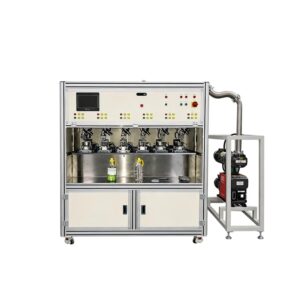
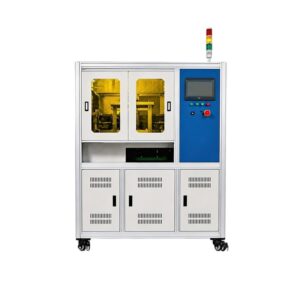
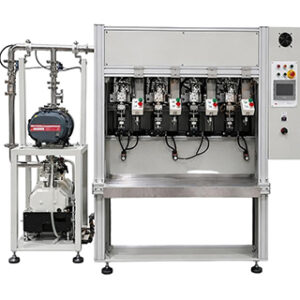
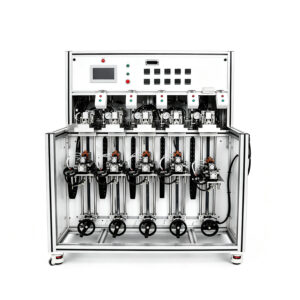
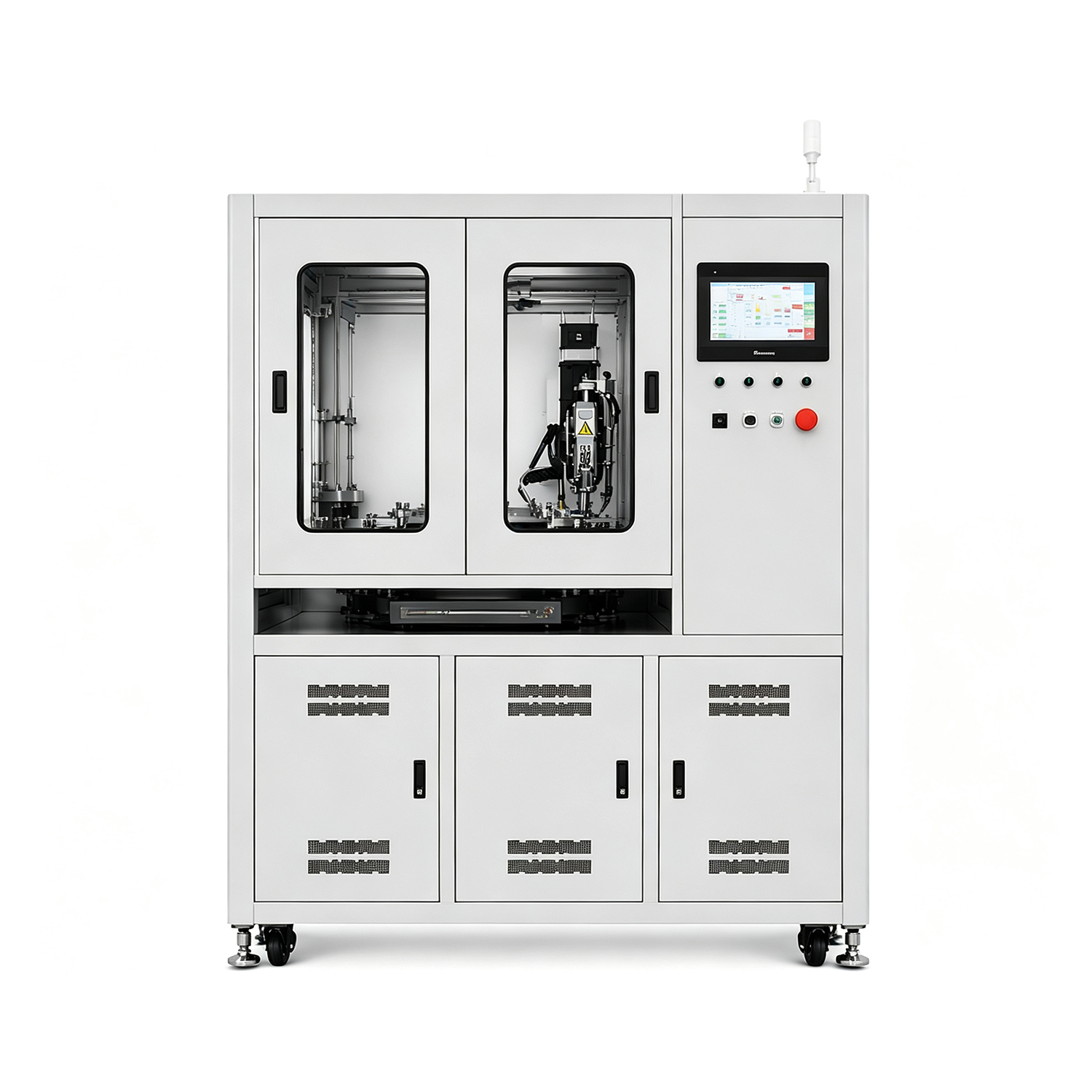
A copper heat pipe bending machine is automated CNC equipment that forms sealed, fluid-charged heat pipes into the curved or angled geometries required for final product integration — without damaging the internal wick structure, breaking the hermetic seal, or causing working-fluid leakage. CoolingThermal’s mandrel-assisted heat pipe bending machine supports round pipes from Ø5 to Ø12 mm and flat vapor chambers, delivers bend angles of 90°, 120°, 135° and 180° at ±0.5 mm radius accuracy, and runs 150–400 pieces per hour in fully automated production-line operation.
Why Choose Our Heat Pipe Bending Machine
1.Precision Bending Without Kinking or Internal Collapse
Sealed copper heat pipes cannot tolerate sharp bends or internal collapse. Our machine uses servo-controlled mandrel-assisted bending to form smooth curves while maintaining internal pressure integrity. Bending radius reaches ±0.5mm precision, and internal wick structure remains undamaged throughout the forming process. Pipes exit with consistent wall thickness and no micro-cracks at the bend.
2.Maintains Sealed Integrity During Post-Production Forming
Heat pipes arrive at the bending station already sealed and filled with working fluid. Unlike traditional bending that risks seam rupture or fluid leakage, our machine applies controlled force distributed across a mandrel support region — preventing localized stress concentration at the bend point. Post-bend, helium leak testing confirms zero hermeticity loss.
3.Multiple Bending Angles & Radius Configurations
The machine supports 90°, 120°, 135°, and 180° bends with programmable bending radius (R5–R50 depending on pipe diameter). Servo motor positioning ensures repeatable accuracy across production runs. Changing bend angles or radius requires only software adjustment — no tooling change needed. Supports round pipes (Ø4–Ø12mm) and flat vapor chambers.
4.High-Speed Automated Bending for Mass Production
The machine bends, ejects, and positions the next pipe automatically — throughput reaches 150–300 pipes per hour depending on bend complexity. Integrated with upstream degassing and downstream testing, the bending station fits seamlessly into high-volume production lines without creating bottlenecks.
5.Vision-Guided Quality Control on Every Pipe
A high-resolution CCD vision system inspects every pipe before, during and after bending. Pre-bend, it detects pipe edge and opening direction at ±0.1 mm accuracy to ensure correct orientation. During bending, servo feedback continuously adjusts position to maintain the programmed radius and angle. Post-bend, the system verifies radius and angle against specification (±0.5 mm / ±1°). Any out-of-spec pipe triggers an alarm and is automatically diverted to a reject bin — no defective parts pass to the next station.
Technical Specifications
| Specification | Details |
| Voltage | AC 220V / 380V (configurable) |
| Motor Power | 2.5 – 3.5 kW |
| Pipe Diameter | Ø5 – Ø12 mm (round tubes and flat vapor chambers) |
| Pipe Length | 150 – 600 mm (servo adjustable) |
| Wall Thickness | 0.1 – 1.0 mm |
| Bending Angles | 90° / 120° / 135° / 180° (fully programmable via PLC) |
| Bending Radius | R12 – R55 mm (depends on pipe diameter & wall thickness) |
| Bending Precision | ±0.5 mm radius, ±1° angle (verified by vision system) |
| Yield Rate | 99% (excellent curvature consistency) |
| Cycle Time | 20 – 60 sec per pipe (angle and radius dependent) |
| Production Capacity | 150 – 300 pcs/hr standard, up to 400 pcs/hr (90° simple bends) |
| Mandrel Types | Interchangeable, supports 6 different radii simultaneously |
| Vision System | CCD photoelectric alignment ±0.1 mm + opening-direction detection |
| Pipe Loading | Funnel-fed automatic loading and discharge |
| Operating Mode | Fully automatic, PLC with 90+ preset bend programs |
| Servo Control | Servo rotating shaft + servo positioning, supports 2D and 3D bends |
| Programmable Profiles | Stores up to 90 sets of bend data (coordinate format, user-friendly UI) |
| Optional Features | Pressure test post-bend (verifies hermeticity), edge-selection automation |
| Machine Dimensions | 1,900 × 1,100 × 1,600 mm |
| Weight | 550 kg |
Where the Heat Pipe Bending Machine Fits in Your Production Line
The heat pipe bending machine is one of the final forming steps — it comes after sealing and working fluid injection, and before final thermal performance testing. At this stage, the heat pipe is a completed sealed thermal device, and bending shapes it for final product integration (curved cooling modules, fitted thermal paths, etc.).
In a typical heat pipe production line, the process flow looks like this:
Tube Cutting → Powder Filling → Tube Shrinking → Degassing & Fluid Injection → Sealing & Welding → Heat Pipe Bending → Flattening (if needed) → Thermal Performance Testing → Final Packaging
The bending machine sits at Step 7, after the heat pipe is fully sealed and functional. Its forming quality determines whether the heat pipe maintains performance in its final curved shape. We supply equipment for every step — the bending machine can be ordered standalone or integrated with our complete heat pipe production system.
How the Automatic Heat Pipe Bending Machine Works

Pipe Positioning
✓ Pipe diameter matches the selected tool configuration
✓ Pipe is centered in the work zone (±0.2mm tolerance)
✓ Sealing seam location is clear of the bending region
✓ Pipe surface is free of major defects or dents

Assisted Bending Engagement
• Mandrel prevents internal collapse by providing distributed support along the bend arc
• Rotating die applies controlled bending force without sharp stress concentration
• The pipe deforms uniformly across the bend region, creating smooth curvature
• Internal wick structure remains intact; working fluid redistributes gradually around the curve

Real-Time Bend Quality Monitoring
✓ Pressure sensor on the mandrel ensures consistent contact force throughout the bend
✓ Rotation angle encoder confirms the die completes the exact programmed angle (±1°)
✓ Torque sensor on the bending die detects if resistance increases unexpectedly (indicating internal collapse risk)
✓ Temperature sensor on the pipe surface monitors if localized heating occurs (friction risk)
If any parameter goes out of range during bending, the machine immediately stops, reverses slightly to relieve stress, then alerts the operator. This prevents damage to the heat pipe and maintains 100% first-pass quality.

Cooling & Dimensional Verification
Once cooling is complete, the high-resolution CCD vision system takes a post-bend image and performs geometric verification:
✓ Radius of curvature measurement (compared against ±0.5mm tolerance)
✓ Bend angle verification (compared against ±1° tolerance)
✓ Surface finish inspection (no kinking, wrinkles, or cracks visible)
✓ Pipe roundness check (confirms no flattening or oval deformation)